It does not take long to walk into a hotel lobby, restaurant, or resort and notice the atmosphere. The combination of the lighting, furniture, walls, and artwork is designed to create an experience. Hospitality millwork is one such factor that influences this experience without much commotion. Millwork assists in defining the space, including the reception desk and built-in cabinets as well as decorative wall panels.
Design in hospitality settings should not just be good to look at. These areas deal with a lot of traffic. Visitors come in, take meals, rest, and go around the building throughout the day and night. Due to this, hospitality millwork should be able to take a lot of traffic but not be unappealing. You desire surfaces that are easy to scratch, furniture that is strong over years and designs that are in line with the brand style.
When you are designing hospitality spaces, there are three aspects that you need to balance: durability, maintenance, and aesthetics. With the combination of these three factors, the space is comfortable for the visitors and convenient for the employees.
You will also learn in this guide how to create hospitality millwork that will withstand longer, remain easy to maintain and enhance the experience for the guests.
What Is Hospitality Millwork?
Definition and Importance
Millwork is any wood or ornamental building materials that are manufactured in a mill. This is not what you pick up at one of the big-box stores in a hotel or restaurant. It is tailor-made and embedded in the building structure. This is significant since it is shaping the brand.
When the hospitality millwork appears to be cheap or scratched, the guests will believe that the entire hotel is of low quality.
Common Hospitality Millwork Installations
You will find hospitality millwork all through the travelling business. The most popular locations are these:
- Reception Desks: This is the main location of the lobby where the guests can be checked in.
- Hotel Room Cabinetry: Mini-bar, television stands, and closets.
- Restaurant Bars: These are the hardy counters on which individuals sit when having beverages.
- Wall Panels: This is a huge piece of wood material that is used to cover concrete walls to make them warm.
- Built-in Wardrobes: Storage areas that remain attached to the walls of the room.
- Ornamental Wood Finishings: Ceiling trims or beams that are used to decorate a room.
Why Hospitality Spaces Require Specialized Millwork
Wood that is of home grade cannot be used in a hotel. The areas of the hospitality are highly frequented by thousands of people who pass by and touch these objects. They also need regular washing using industrial disinfectants, which would spoil normal paint.
The operational hours of these buildings are long-lasting, usually 24/7; thus, there is no time to rest the furniture. Lastly, it should be brand-based so as to fit the colors and style of the company.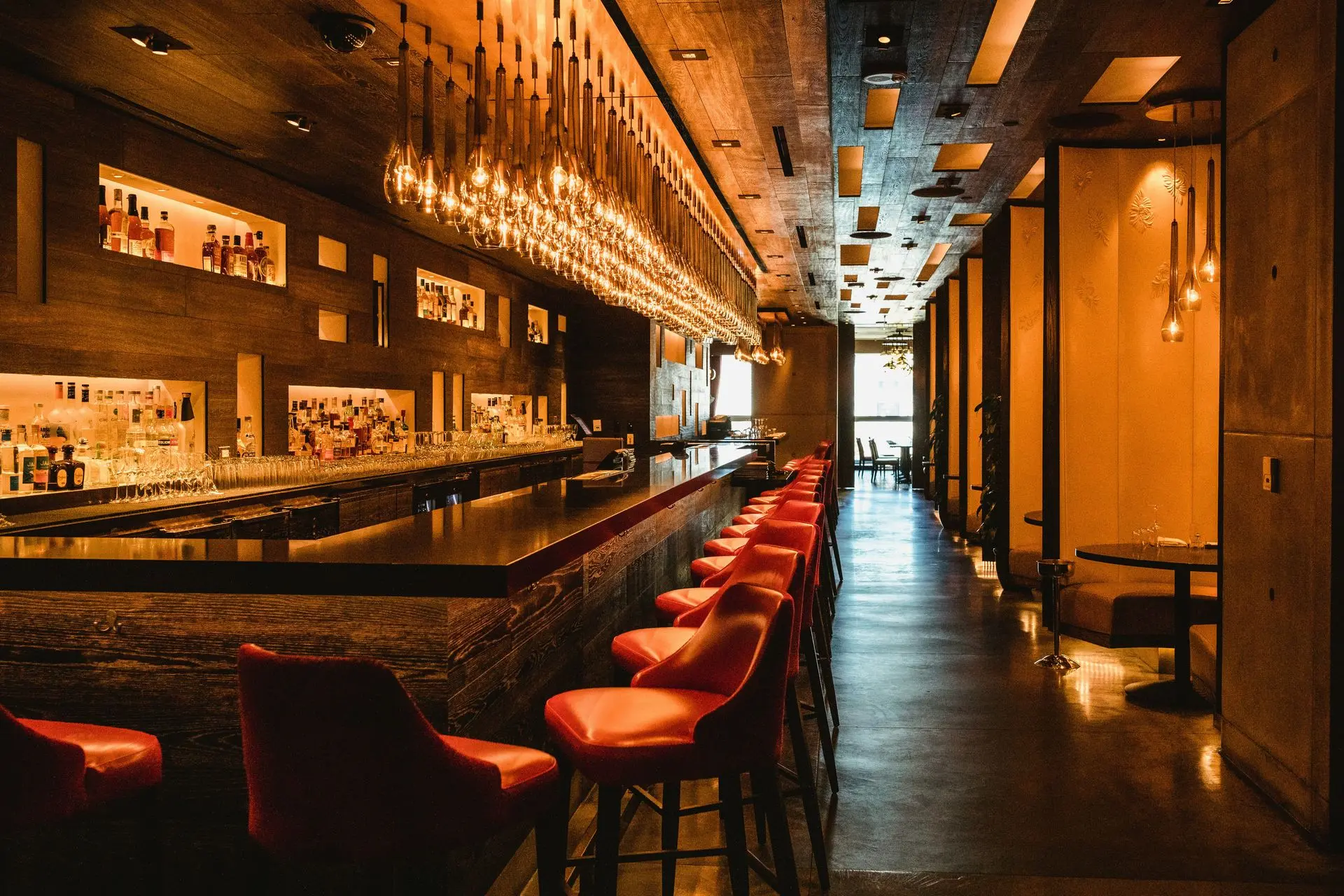
Key Design Goals for Hospitality Millwork
Durability for High-Traffic Environments
The first rule is durability. Designers make selections of materials that can be beaten on. This implies that the wood will not be dented when a vacuum cleaner bumps into it and the edges will not be peeled when a luggage cart rubs against them. The structural integrity will prevent a heavy stone countertop on a bar from making the wooden base sink in the course of time.
Low-Maintenance Surfaces
In a busy hotel, time is money. When it takes one hour to scrub an item of millwork, it is not a good design. The most appropriate millwork is a surface that does not easily show stains of coffee or wine and one that is not easily marked by fingers. The goal of designers is to have low maintenance so that a quick wipe-down would make everything appear brand new again.
Aesthetic Appeal and Brand Identity in Hospitality Millwork
Although it must be hard, it must be good-looking. The millwork justifies the guest experience. In the case of a luxury boutique hotel, dark and rich walnuts and gold accents may be observed. In the case of a tech-oriented hotel that is modern, light wood with clean, sharp lines may be evident. The personality of the brand is realized through the millwork.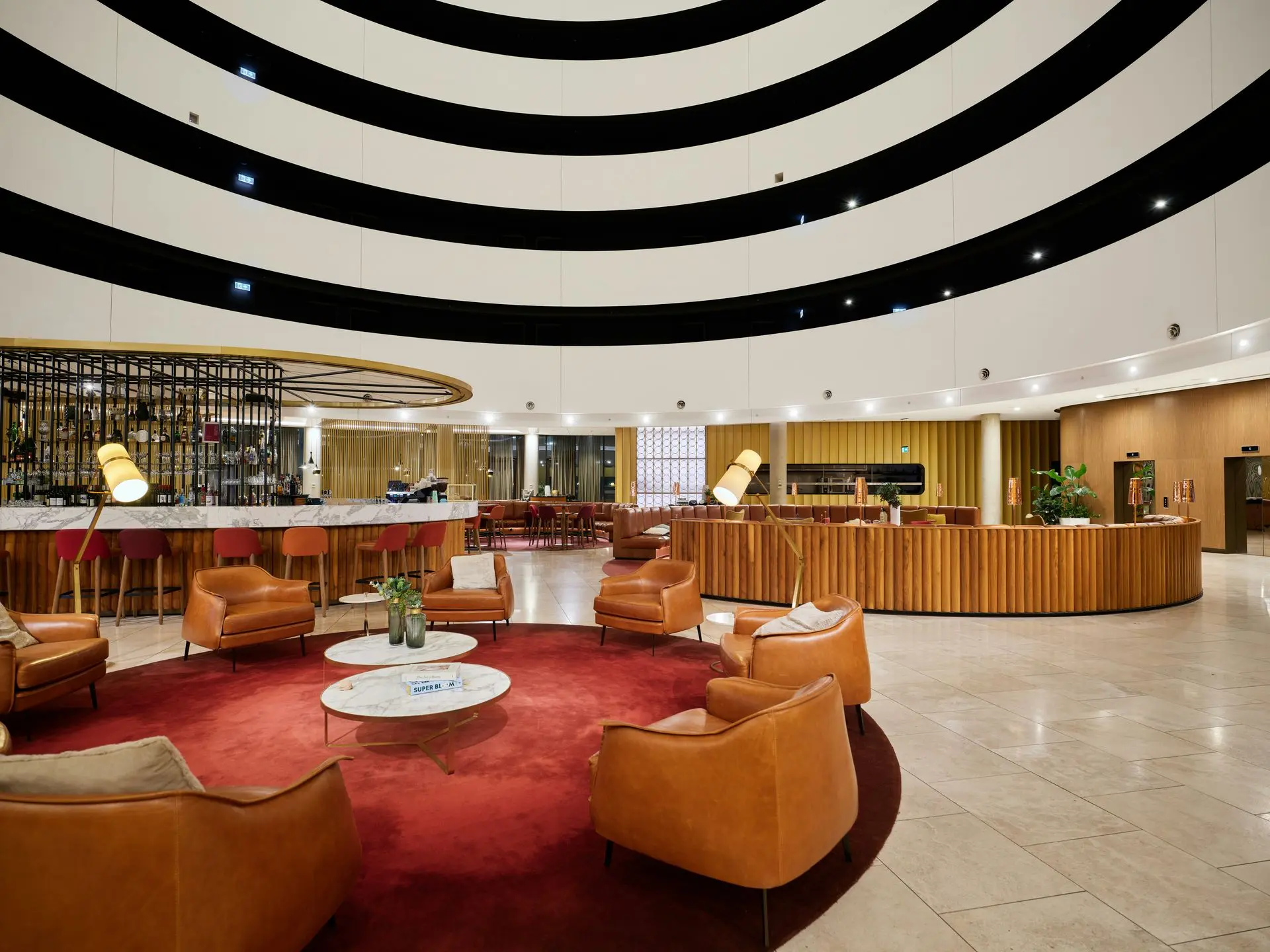
Best Materials for Durable Hospitality Millwork
Solid Wood
The gold standard is solid wood that is the most powerful and beautiful. The appearance is high quality since it is the genuine article. In the case of luxury hotels, the designers apply solid oak, walnut, or maple to the objects that are handled frequently by the guests, such as the handrail or edges of a tabletop. It is very long-lasting since you can sand it and refinish it in case it is scratched.
Engineered Wood Products
Engineered wood is very stable and cost-effective; hence, most millwork uses engineered wood.
- MDF (Medium Density Fiberboard): It is very smooth and is usable when one wants to paint it.
- Plywood: It is stronger than MDF and is quite good at holding screws.
- Veneered Panels: This is a layer of wood, which is glued onto a cheaper core and is really costly wood. It has the appearance of solid wood at a low cost.
Laminate and High-Pressure Laminate (HPL)
Where you need just about indestructible use HPL. It consists of panels of paper and resin that are pressed together high-heat-wise. It is extremely tough to scratch, wet, and even strike. It is commonly found on the inside of hotel closets or on restaurant tabletops.
Thermally Fused Laminates (TFL)
TFL is a cheaper variant of laminate. It suits well on the sides of cabinets or shelves in guest rooms. It provides a unified appearance in hundreds of rooms and will withstand everyday use.
Metal and Glass Accents
The modern millwork can consist of wood combined with metal (such as brass or stainless steel) and glass. Kickplates in a desk are made of metal so that the shoes used will not scuff the wood. Glass tops are used to cover the wooden surfaces to prevent the presence of the drinking glasses' water rings.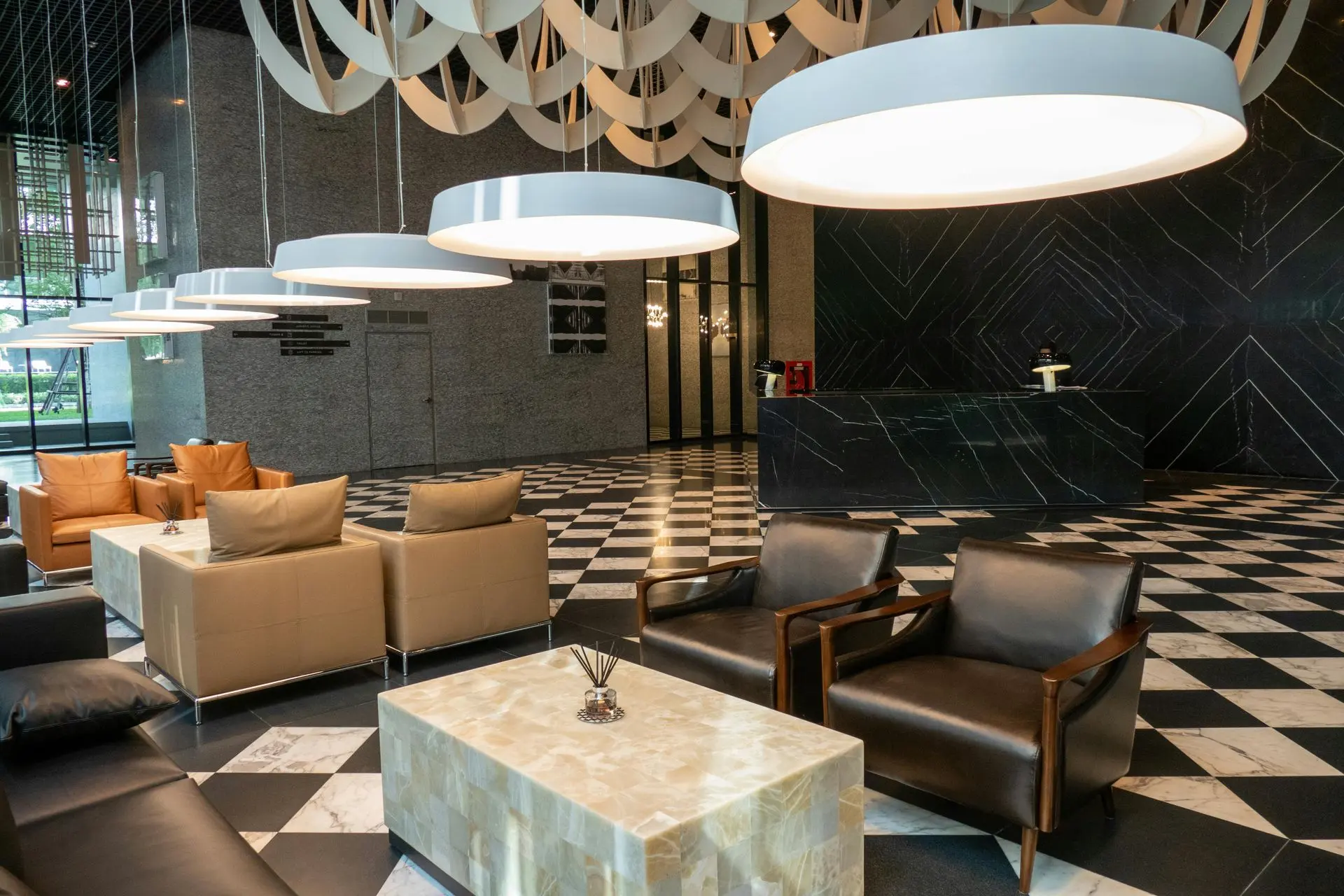
Designing Hospitality Millwork for Wear Resistance
High-Traffic Areas That Need Extra Protection
Some of them are beaten with wear. The busiest place is the reception area. Lots of luggage carts are found in elevator lobbies. Bars of restaurants are involved with constant moisture and food. Constant cleaning equipment is in the hallways. There must also be a protection plan on every corner in these areas.
Protective Design Strategies
The designers use armor in order to make millwork enduring. Sturdier wood or plastic (PVC) banding is required towards the edges to avoid peeling. Metallic protective corner guards will prevent the chipping of the wood by suitcases. The surfaces are impact-resistant so that the bang of the huge blow does not leave a trace.
Surface Finishes That Improve Durability
The coat on the exterior of the wood is the clear finish.
- Polyurethane: A highly robust plastic type of coating.
- Conversion Varnish: A chemical-cure finish, which is highly hard and is not easily affected by chemicals.
- UV-Cured Finishes: These have been dried immediately using special lights and as such, they are highly durable.
- Scratch-Resistant Laminates: These are provided with a built-in overcoat to avoid the fine lines appearing.
Maintenance Considerations in Hospitality Millwork Design
Why Maintenance-Friendly Design Matters
Hotels never close. When a reception desk gets broken, you cannot close the lobby down until it is repaired, which takes a week. The hotel incurs losses every time a room goes offline due to furniture being broken. Maintenance design will ensure that the hotel remains in business and the customers remain satisfied.
Easy-Clean Surfaces
Designers tend to use non-porous substances such as laminates or closed stones. When a surface has small holes (such as unsealed wood), bacteria and dirt are trapped in. The fact that it has a stain-resistant finish is an assurance that the permanent marker or red wine spill will not destroy the furniture. Rough textures are not good compared to smooth finishes since there is no place that dirt can be hidden.
Replaceable Components
Smart millwork is modular. This implies that in case of damage to a single panel in a long wall, you can pull that single panel off and fit another without destroying the whole wall. It is also easy to fix a thing within a short time by the handyman of the hotel since they use common hardware (hinges and handles).
Preventing Long-Term Damage
Water is the enemy of wood. The designers apply water-resistant materials in the bathrooms or around bars. They also have heat-resistant surfaces where the guests may leave a hot coffee pot or a hair straightener. Seal all sides, including those that are not visible, in order to keep the wood dry.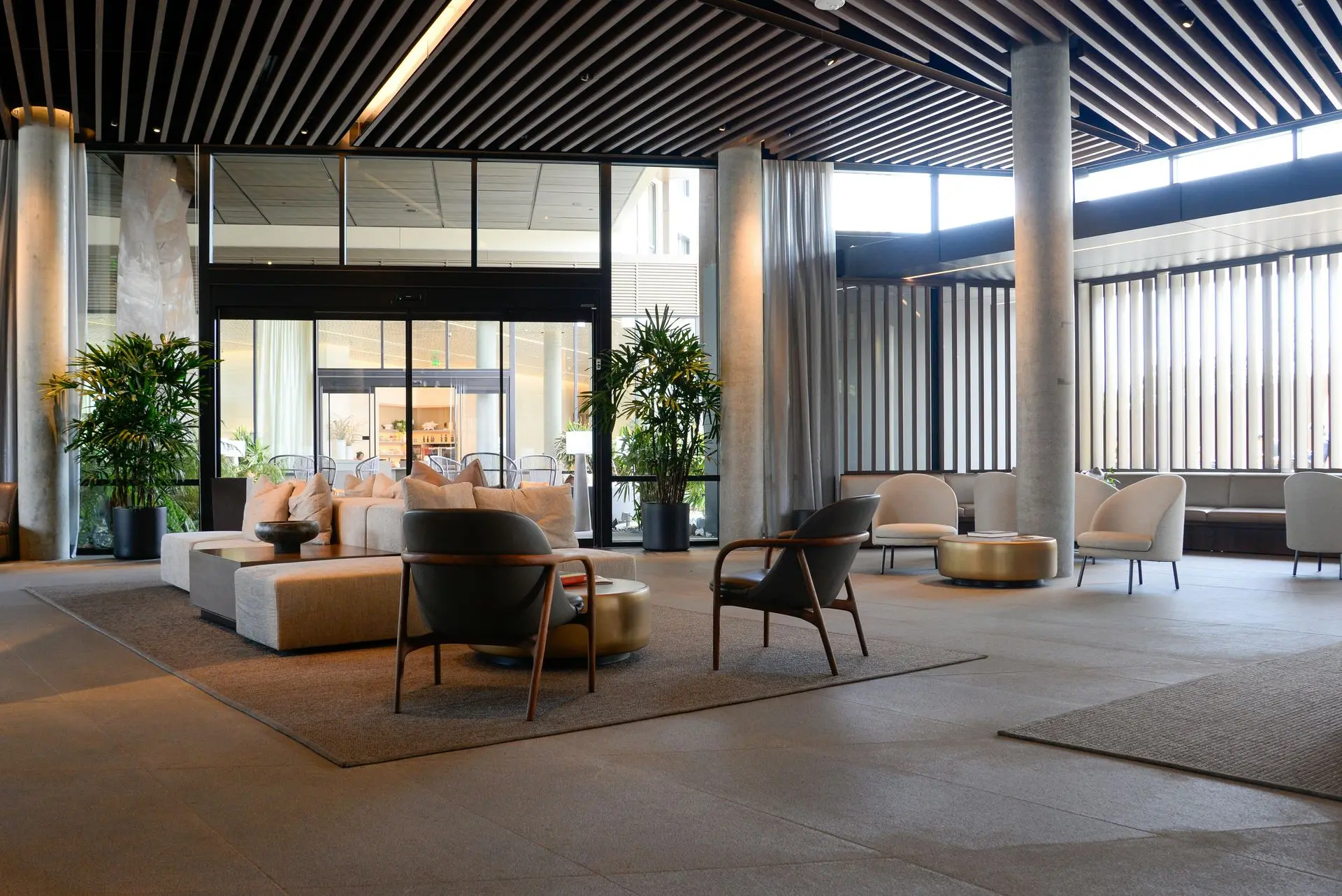
Balancing Aesthetics with Functionality
Creating Visually Appealing Interiors
You need not make beauty subordinate to strength. Various textures and wood grains are used by designers in order to make it interesting. Depending on how it is fitted to the wooden shelves (i.e., with LED strips or beneath the bar counter), the millwork glows and gives the impression of being high-end. Ornamental paneling is an addition added to flat walls.
Supporting Hospitality Branding Through Millwork
The millwork must appear as a part of that particular hotel chain. A signature reception desk that has a distinctive shape or a special wood-cut logo will remind the guests of their place of stay. Once the furniture is based on the brand colors and the vibe, the guest will have a feeling that he or she is in a well-thought-out and professional space.
Combining Modern and Classic Design Elements
Many hotels now mix styles. In the guest rooms there may be simple and plain-looking woodwork with flat surfaces but in the main ballroom there should be the luxury decoration style. A few of the boutique hotels choose hospitality interiors that are a bit rustic and made of reclaimed wood, which looks like an old one but is finished with modern stuff to remain strong.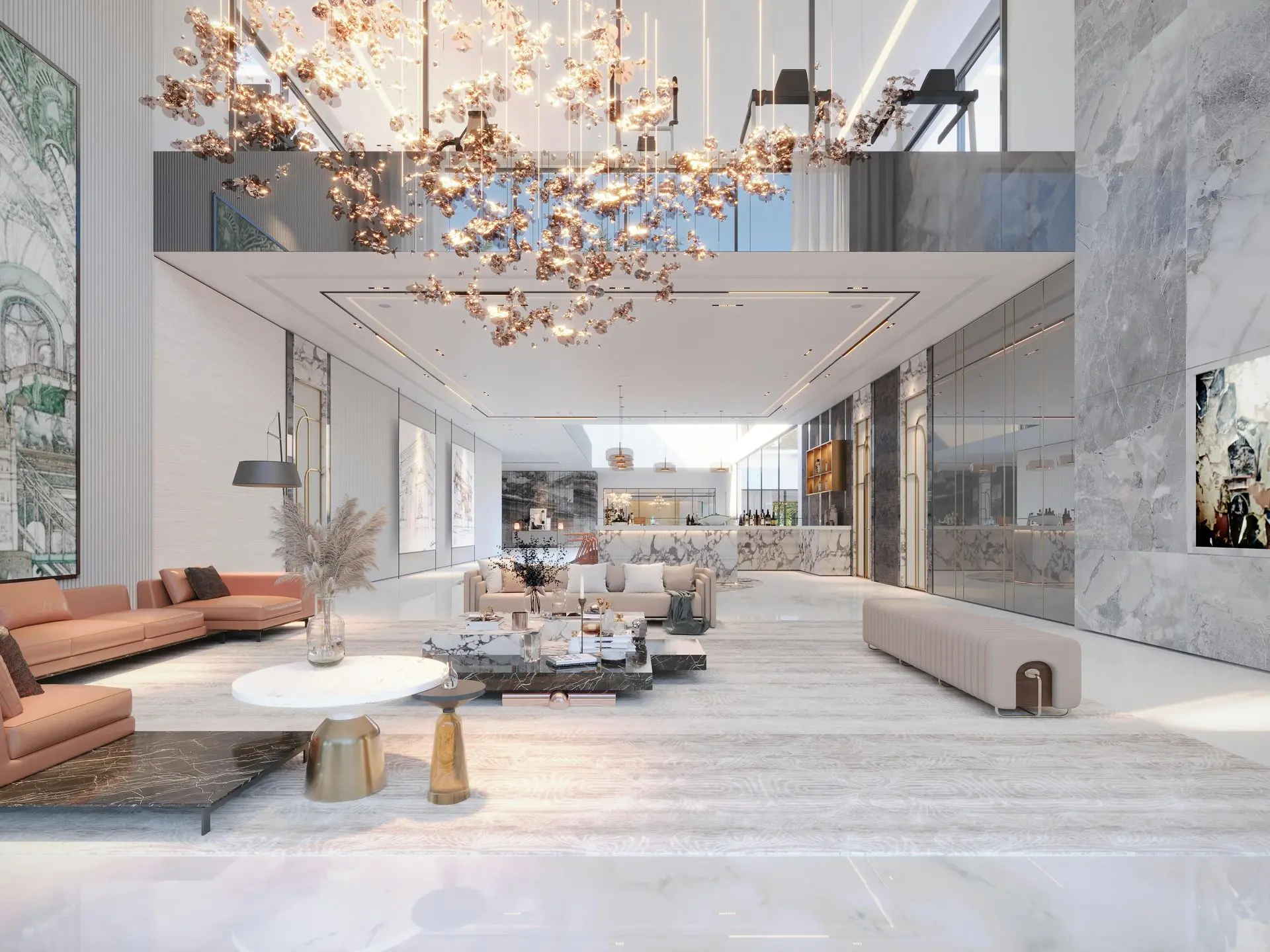
Hospitality Millwork Applications in Different Spaces
Hospitality Millwork in Hotel Guest Rooms
The guest room is a small home. Millwork furnishing here includes built-in wardrobes, a bed headboard that is fixed to the wall and a vanity unit in the bathroom that has the sink. The storage cabinets should be user-friendly in order to enable guests to locate their items with ease.
Hotel Lobbies
It is all about the wow factor in the lobby. The reception desks are always enormous, dazzling constructions. The height of feature wall panels may go to two stories. Ornamental shelving is made up of art and books to give the room a living room feel.
Restaurants and Bars
In this case, the millwork is practical equipment. There are bar counters that are thirst runs to receive spilled beer. Booth seating involves wooden frames, which have to bear the weight of thousands of diners. Back bar cabinets are used to showcase costly bottles and should be convenient to the bartenders.
Conference and Event Spaces
At such places, the millwork should be adjustable. Backdrops used on stages give a presentational appearance to speakers. A custom podium and wall panel would have discrete places where wires and microphones can be installed to prevent the technology from looking chaotic.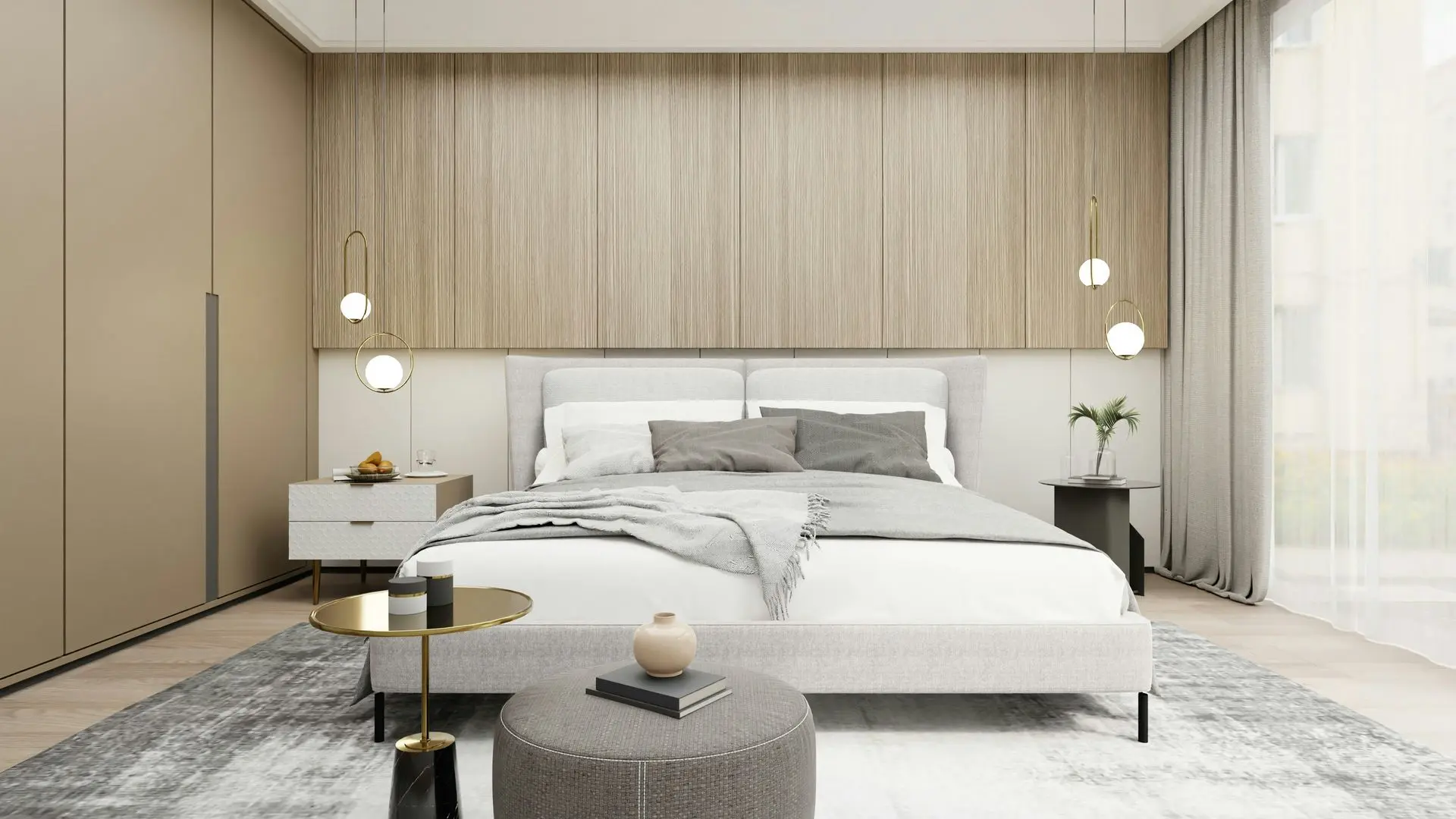
Sustainability in Hospitality Millwork
Eco-Friendly Materials
A large number of guests are more interested in the planet. FSC-certified wood is used by designers and it is timber that originates in well-managed forests. They also work with recycled materials, such as the use of wood scraps that are pressed into new boards, as well as low-emission finishes (Low VOC) that do not emit the stinky chemicals into the air.
Sustainable Manufacturing Practices
Construction of millwork may produce a lot of waste. The modern shops work with computers and controlled machines (CNC) to cut wood in perfectly shaped pieces and save a lot of waste. Energy-saving production processes assist the factory to consume less electricity during construction of the furniture.
Why Sustainability Matters in Hospitality Design
Green branding appeals to the so-called eco-conscious passengers, who would be prepared to pay a premium on a green hotel. It also assists buildings in having accolades such as LEED which would save the building owner money on taxes and power bills in the long term.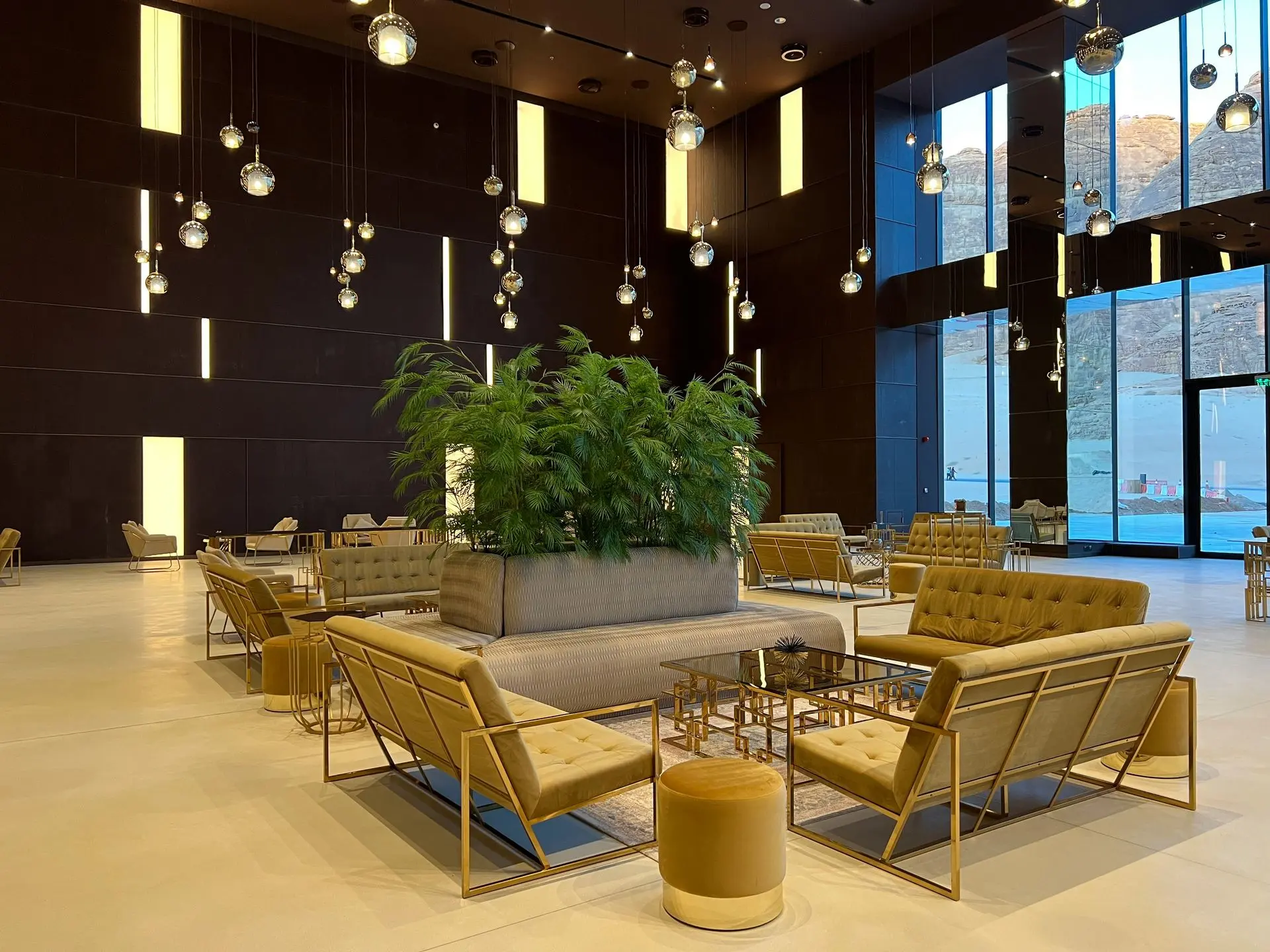
Common Mistakes to Avoid in Hospitality Millwork Design
- Bad Materials: Laminate a top on a bar using cheap home laminate that is going to peel within three months.
- Lack of Thinking of Maintenance: Building one of the most beautiful desks with minute grooves that collect dust and cannot be cleaned.
- The problem of over-complexity: Designed in such a way that, when a single component of the design fails, the entire system has to be discarded.
- Poor Finishing: Failing to apply enough protective coating on the wood and this causes water rings and lost colors.
- None Moisture Protection: Leaving unsealed regular wood in a wet hotel bathroom.
Avoiding these mistakes ensures that hospitality millwork remains durable and attractive.
Future Trends in Hospitality Millwork Design
Smart Integrated Furniture
The future is "smart." This implies having millwork complete with phone charging points and concealed guest phone storage. There may even be wood panels with touch-sensitive controls built in on the surface.
Mixed Material Designs
We are witnessing an increased use of wood with metal and stone. As an illustration, a nightstand made of wood with a top made of marble and brass handles. This ambivalent media appearance is extremely fashionable and it provides additional strength to the most frequently used sections.
Minimalist and Modern Interiors
There is a shift towards clean lines and “functional elegance." Rather than ornamenting them heavily and carving them, people desire smooth surfaces that are airy.
Modular Millwork Systems
Most hotels are shifting to modular systems to save time in the construction process. They are ready-assembled in a factory and assembled on the scene. It provides the option of being installed faster and it becomes far easier to change the appearance of the hotel in five years.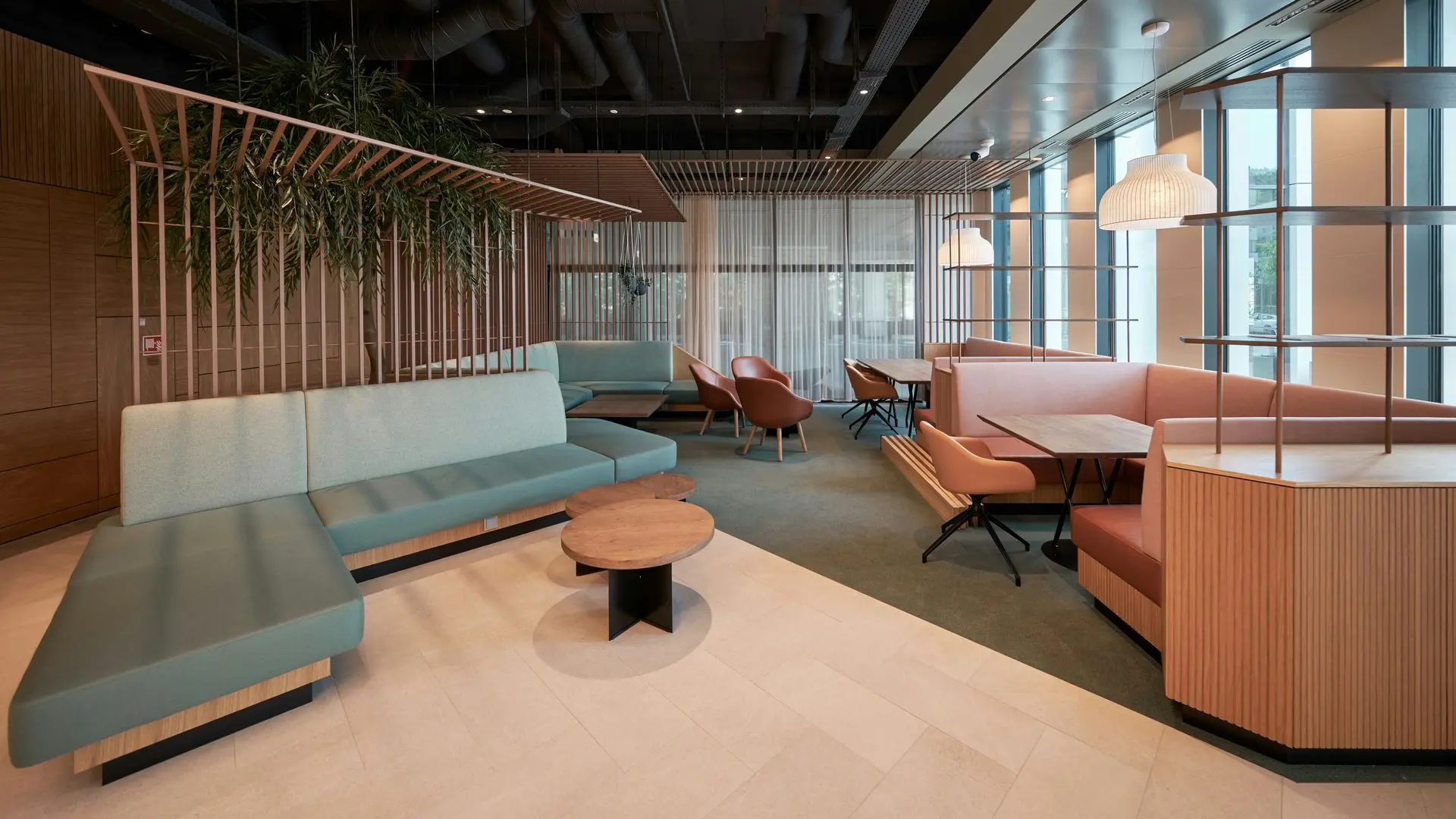
Final Thoughts: Choose Belosso for Durable and Elegant Hospitality Millwork
Designing hospitality millwork requires balancing beauty, durability, and practicality. You must think like an artist to make it beautiful, like an engineer to make it strong and like a housecleaner to make it practical.
When you mix the durability, maintenance, and looks in the right measure, the hotel becomes more efficient and less expensive to repair, and the guest would feel that he/she is staying somewhere special. Good millwork is not a simple decoration; it is an investment in the future of the business.
At Belosso, we know just how to produce these popular masterpieces. Our team is dedicated to finding the most preferable materials and high manufacturing so your project can have the best appearance and years of service.
We would like to invite you to contact us today and find out how we can make your hospitality vision a reality using custom millwork, which will withstand the test of time.
FAQs
1. What is the best material for a high-traffic hotel reception desk?
The best options would be High-Pressure Laminate (HPL) and solid wood with conversion varnish over it. HPL has unbelievable scratch resistance, and treated solid wood is also an excellent material to work with in terms of its premium feel that can withstand thousands of touches.
2. Can millwork help with soundproofing in busy restaurants?
Yes. With sound-absorbing backing and perforated wood millwork with acoustic wall panels, the amount of noise can be considerably decreased, and the experience of dining out becomes more comfortable for the visitors.
3. How often should hospitality millwork be replaced or refinished?
Millwork should have durability of 7 to 10 years using high-quality materials and professional finishing before it requires a significant renovation. Nevertheless, those areas that are high impact, such as the tops of bars, may require refinishing after every 3-5 years.
4. Is "green" or sustainable millwork more expensive?
Although certain environmentally friendly materials are more expensive in the short term, they can be more valuable in the long term. Wood that is sustainable tends to be stronger and low-VOC finishes make the environment healthier for the guests, which enhances brand loyalty.
5. What is the difference between millwork and casework?
Millwork is individually designed to suit a given area and in many cases is more ornamental (such as a custom bar). Casework is a standard-sized box or cabinet, which is ready-made. In the case of hospitality, custom millwork is more preferable, as it offers maximum space and brand name.