If you're spending money on custom furniture, the finish is as important as the design. It impacts the appearance, feel and functionality of your furniture over time. The right furniture finishing methods can help you to get the look, feel, and durability you require in your project. Two common approaches are spray finishing and hand finishing, each offering different advantages for custom furniture projects.
Spray finishing results in uniformity among the various items of furniture, and hand finishing is suitable for the skilled craftsman to control certain details and to produce decorative effects. Your choice depends on the design, production volume, desired appearance, budget, and durability requirements.
For instance, a hotel with 100 identical wardrobes can get an advantage from spray finishing to keep the uniformity. Careful hand finishing techniques can be required for a handcrafted dining table with a special aged effect. Knowing the differences will aid you in choosing the appropriate method for your custom furniture project.
What Are Furniture Finishing Methods?
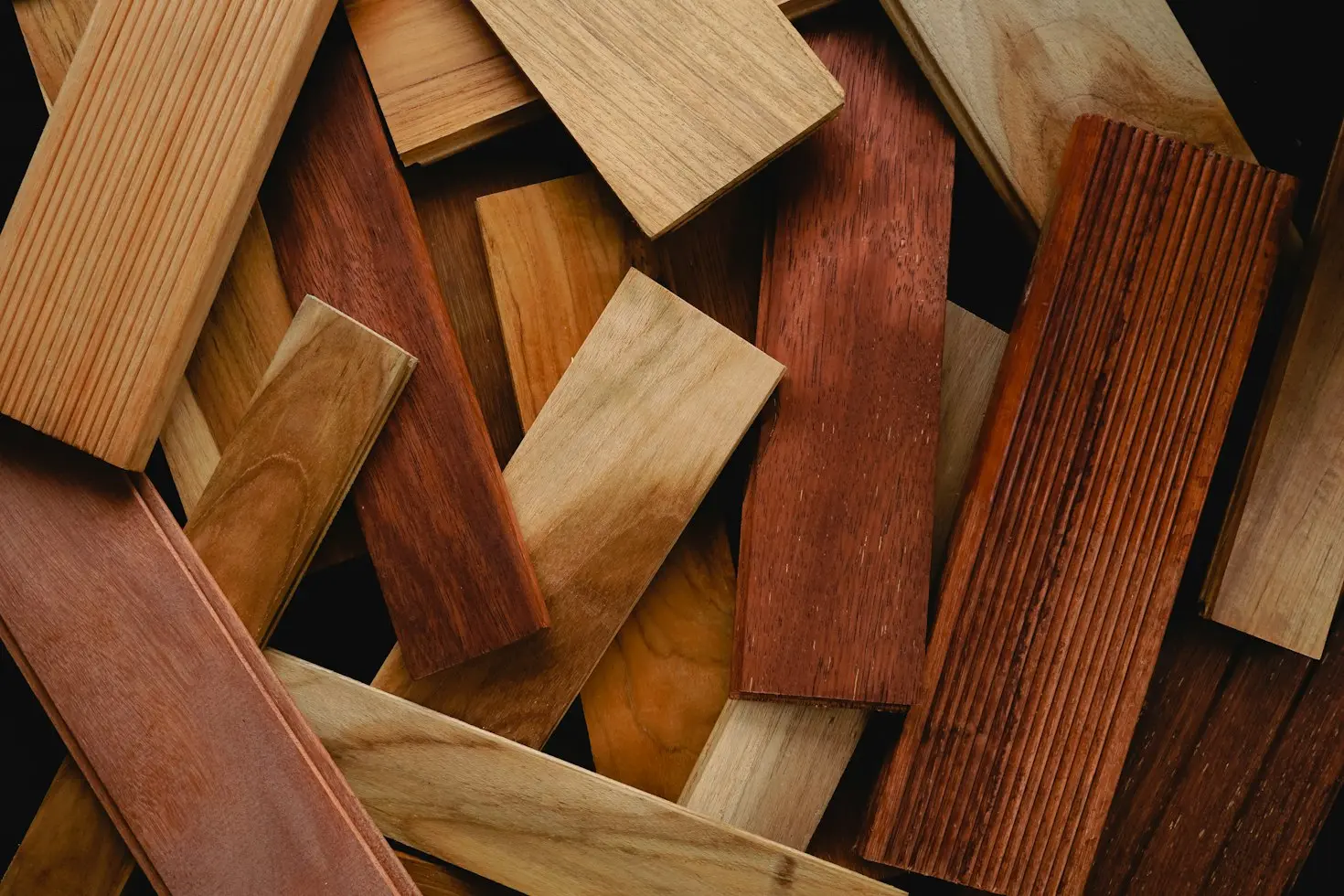
Furniture finishing methods are the methods by which furniture manufacturers protect and/or decorate furniture surfaces. These treatments can enhance the beauty of wood, accentuate its grain, infuse color and help to preserve the surface from the effects of daily use.
The right finish also allows furniture to blend in with the rest of the interior. A hotel room, for instance, might require a uniform satin sheen on dozens of wardrobes and bedside tables, and a custom wooden dining table might require a finish that accentuates the wood grain.
Common furniture finishes include:
- Lacquer Finishes: Obtain a smooth surface of varying degrees of shine according to the product.
- Wood Stains: Add color, but retain the wood grain.
- Clear Wood Finishes: Preserve the natural look of the wood while protecting it.
- Paint Finishes: Give a solid color and contribute to a particular design.
- Melamine and Laminate Surfaces: Provide factory finishes, which may not need traditional finishes after installation.
How the finish is applied is just as important as the finish itself. There are pros and cons to both spray finishing and hand finishing, so choose the method that works for your furniture and project needs.
What Is Spray Finishing in Custom Furniture Manufacturing?
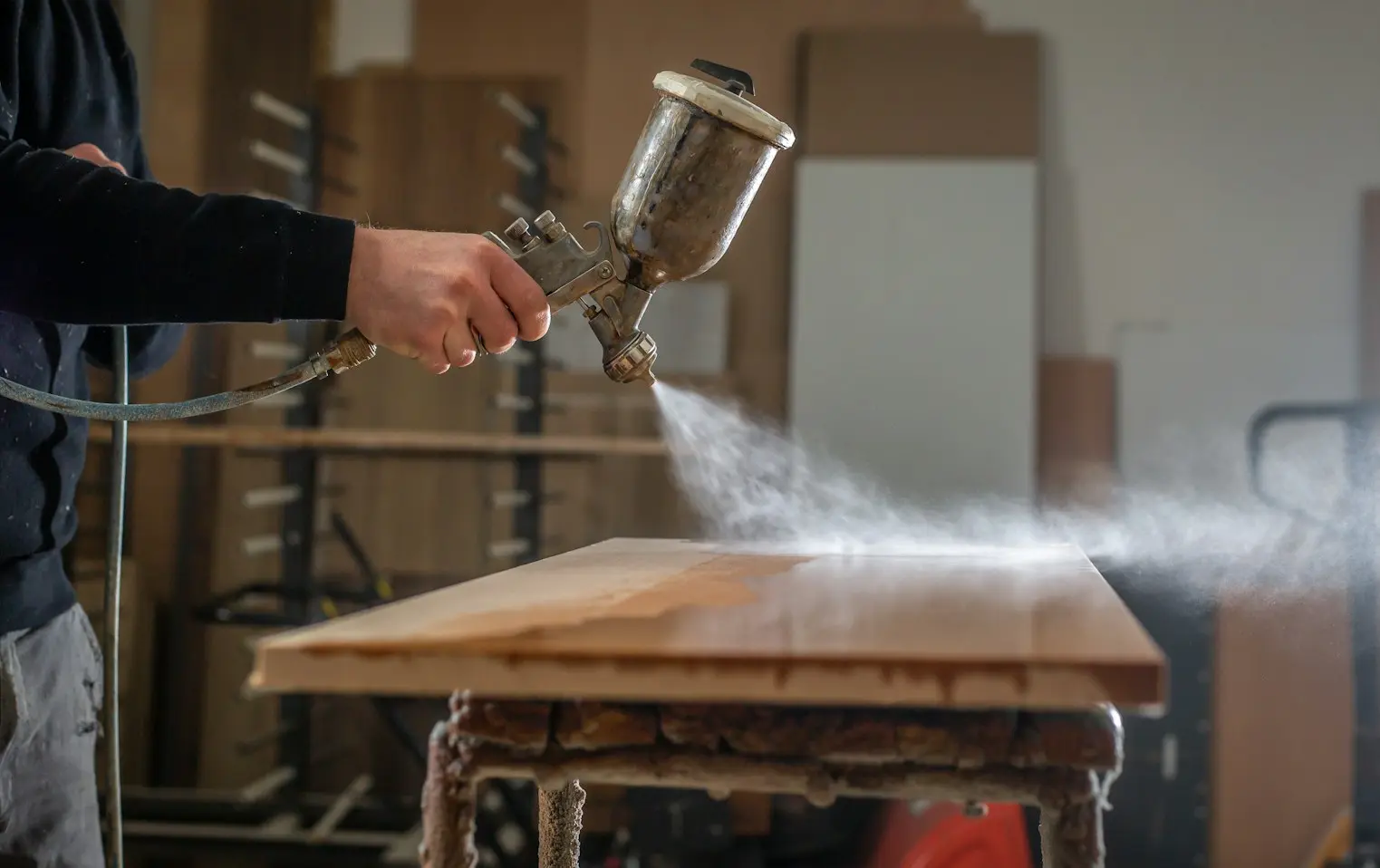
Spray finishing is a method of applying a liquid finish to a furniture surface with the use of special equipment. The equipment creates the coating in the form of fine droplets, enabling the operator to apply the coating on shaped parts, edges and panels in a controlled manner.
Spray finishing is frequently employed in the production of cabinet doors, wardrobes, desks, wall panels, and other parts of furniture where uniformity is important. This can result in a smooth matte finish or a high-gloss finish depending on the coating and equipment.
The steps typically are as follows:
- Surface Preparation: Furniture is sanded, cleaned and prepared so that the coating can adhere properly.
- Coating Preparation: Operator inspects product specifications and prepares coating as per manufacturer's instructions.
- Spray Application: The operator uses the proper equipment settings and spray technique.
- Drying or Curing: The coating dries or cures as per the product requirement.
- Quality inspection: Workers inspect the surface for uneven coverage, dust, runs, scratches, and other defects.
Each step has an impact on the end product. No spray equipment is good enough to overcome poor surface preparation or wrong application.
What Are the Main Benefits of Spray Finishing?
Spray finishing has three significant benefits: repeatable results, efficient production, and consistent coverage. These advantages make it a viable option for a variety of custom furniture projects, particularly when manufacturers require multiple units to be identical.
Consistent Color and Sheen
Operators, who use the same process and coating system can obtain a more uniform appearance from different components. This is important if you have a project with dozens of identical cabinet doors or wardrobes.
Faster Production for Larger Orders
The spray systems can be used to spray appropriate surfaces in a short time, allowing the manufacturer to process larger amounts efficiently. However, the total production time will still require preparation, drying/curing, sanding between coats if necessary, and inspection.
Smooth Surface Coverage
A good operator will be able to apply a coating uniformly over flat panels and many complex shapes. This is dependent upon the coating, equipment, surface condition, and application technique.
Suitable for Modern Interior Designs
Spray finishing is suitable for a wide variety of painted and lacquered surfaces in modern kitchens, wardrobes, office furniture, and hotel interiors.
For instance, you are decorating 40 hotel rooms with identical wardrobes and bedside tables. One can achieve a uniform color and sheen throughout the furniture with a controlled spray-finishing procedure, which will help to make the project appear to be more coordinated.
What Are the Limitations of Spray Finishing?
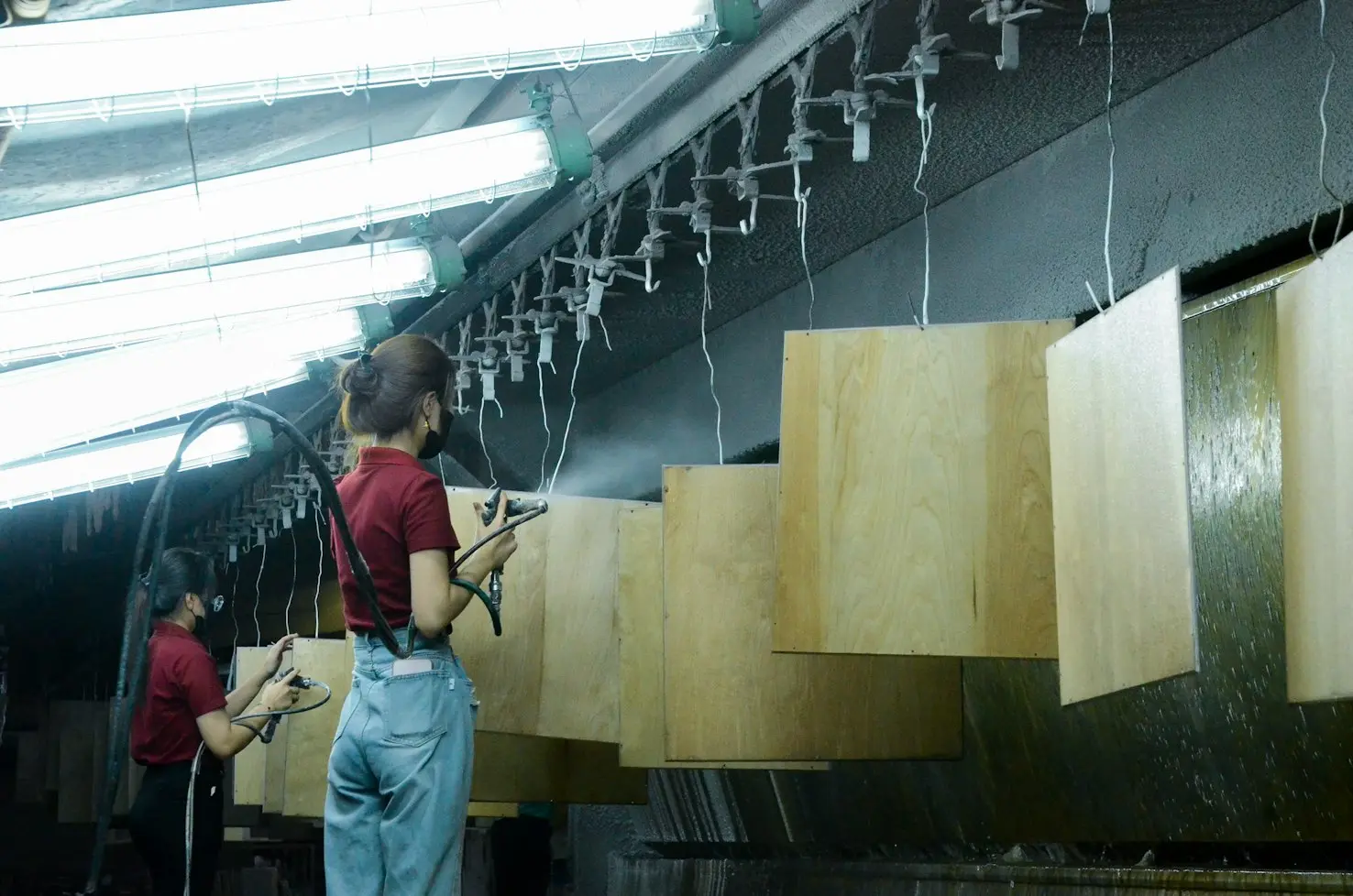
Spray finishing demands proper equipment, regulated working conditions, and trained operators. Manufacturers can experience quality issues, waste of materials, and extra manufacturing expenses if these elements are not in place.
- Equipment Costs: Investment is needed in spray systems, ventilation, protective equipment, and maintenance.
- Overspray: Fine coating particles may fly off the surface being coated and result in waste and contamination when appropriate controls are not used.
- Application Defects: These can be due to incorrect settings or technique and can result in runs, uneven coverage, 'orange peel,' or other surface defects.
- Safety Requirements: Many coatings contain harmful vapors or particles and manufacturers are required to adhere to the safety instructions and appropriate ventilation and protective equipment requirements of the product.
Spray finishing cannot ensure a perfect surface. The hands of the skilled workers should be in control from the preparation to the inspection.
What Is Hand Finishing in Custom Furniture Manufacturing?
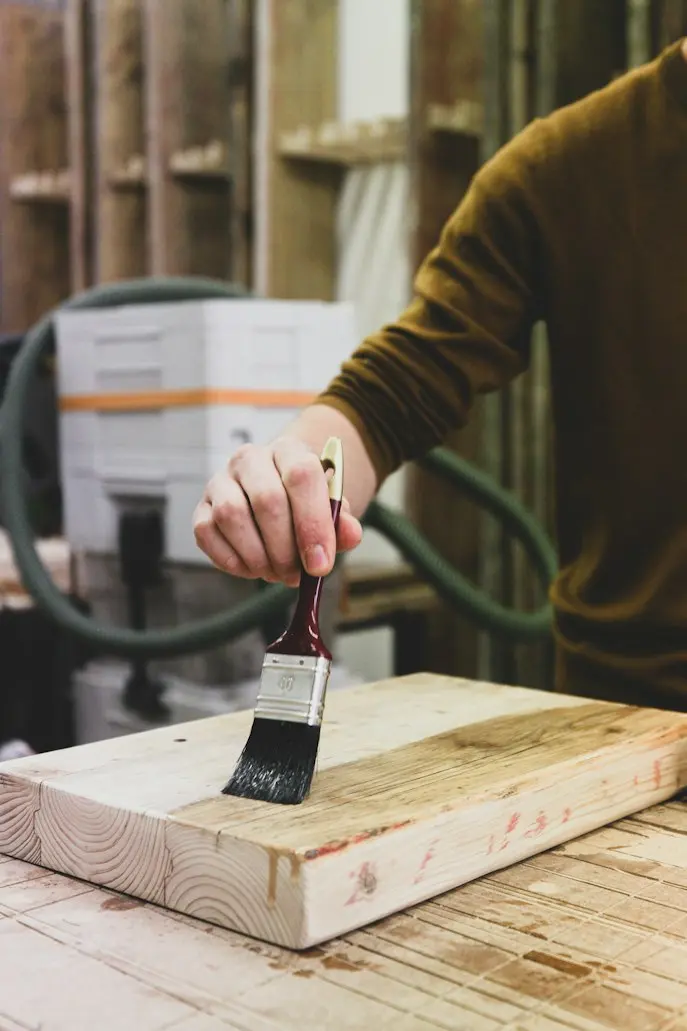
A hand finishing process is where a coating or treatment is applied using brushes, cloths, pads or other hand tools. The actual method is dependent on the product, the type of furniture material, and the desired look of the manufacturer.
This approach allows the craftsperson to have direct control over the application of the finish. It can be very effective for specific decorative effects, traditional finishes, small quantities of furniture, and detailed restoration work.
But hand finishing does not necessarily involve hand application of all coatings. A manufacturer can sand or prepare using machines and then apply a specific finish by hand. There are also projects that incorporate both hand and spray techniques to achieve the desired effect.
What Are the Main Benefits of Hand Finishing?
Hand finishing provides flexibility and direct control of selected surface details. It can aid expert craftsmen in creating certain textures and looks that will match the furniture design.
Greater Control Over Detailed Areas
Brushes, cloths and pads enable the craftsperson to work carefully around some edges, corners, and decorative features. This can be useful if a design has complex details that need to be given special consideration.
Suitable for Specialized Finishes
There are some traditional wood treatments, oils, waxes, and decorative techniques that use manual application. As long as the product allows for that application method, a competent craftsman can modify his technique to get the desired effect.
Useful for Small Batches and Individual Pieces
If you have a single table that you want to finish to order or a small group of decorative furniture, you might not need a large finishing operation. Hand finishing may be a viable alternative if a particular manual process is required for the design.
Can Highlight Natural Wood Character
Some stains and finishes applied by hand can be used to highlight the natural grain and character of wood. The final appearance will vary with the species of wood, the preparation method, the product and the method of application.
For instance, a custom solid wood coffee table might require a finish that showcases its natural beauty instead of giving it a uniform painted look. When the manufacturer recommends the use of a hand-applied oil for that wood and intended use, this may help achieve this look.
What Are the Limitations of Hand Finishing?
Hand finishing takes time, attention and a skilled craftsman. It can create great looking products, but it will be difficult to keep the look consistent on numerous furniture items if the process is not well controlled.
- Variation Between Pieces: Color, sheen, and texture may vary slightly from piece to piece due to different working conditions or application techniques.
- Time-Consuming Production: When a project has numerous components, manual application can be time-consuming.
- Labor Requirements: More labor may be needed for large orders, and coordination is important.
- Application Marks: If the craftsperson does not have the proper technique, brush strokes, overlapping areas, or thickness of the application, it may influence the final appearance.
These restrictions do not render hand finishing as a poor alternative. They just mean that you need to adapt the technique to the needs of the project and set clear quality parameters before production starts.
Spray Finishing vs Hand Finishing: What Is the Difference?
Usually spray finishing is used for projects where repeatable surface coverage is required in a number of components, and hand finishing is used for some specialized finishes and treatments that require direct manual control. Both processes do not inherently create higher quality furniture; it is up to the materials, the coating and the application method and quality control.
The following comparison may help you to make a decision on which approach to use in your project.
Factor | Spray Finishing | Hand Finishing |
Finish Consistency | Typically more easily standardized when repeated parts are present | Often requires skill and artistry |
Craftsmanship | Needs to be proficient in application and process control | Needs proficient handiwork and meticulous work |
Production Speed | Can be efficient for larger quantities | May need more time for larger quantities |
Surface Appearance | Can produce smooth, even coatings | Can produce desired hand applied textures and effects |
Labor Requirements | Needs trained operators and suitable equipment | Requires the work of craftsmen |
Initial Setup | May need increased equipment and workspace costs | May need less specialized equipment for some techniques |
Best Applications | Mating cabinet doors, cabinet panels, and repeated furniture parts | Bespoke, traditional finishes and special detailing. |
Be aware of these differences, as they are based on the coating and application method. Some hand finishes are very consistent, and some spray finishes need a lot of handwork between coats.
Which Method Offers Better Finish Consistency?
Spray finishing can be an edge if you have a lot of furniture pieces that require the same color, shine and surface. The control of the equipment and repeatable application technique ensure manufacturers achieve a consistent result.
When different furniture pieces are side by side, consistency is important. A slight variation in color or gloss can be discernible on a long line of wardrobes or kitchen cabinets.
But spray equipment is not the only way to assure uniformity. The coating mixture, the conditions of application, the preparation of the surface, and the curing process must also be controlled by the operators.
Hand finishing can also produce uniform finishes provided that the craftsperson has a clear procedure and is skillful. The challenge may intensify when there are more components to finish, especially if multiple workers are applying the finish.
- Expert Tip: Request your manufacturer to make a sample with the suggested material and finish before you green light the entire production run. Test the sample in the light the same as the final room, as light conditions may alter the perception of color and sheen.
For instance, in the case of an apartment development of 60 cabinet doors, approve a sample first and set a range of acceptable color and sheen variations. This allows your manufacturer to have a clear reference of the other components.
Which Method Offers Better Craftsmanship?
Hand finishing can give you more direct control over some of the details but does not necessarily make better furniture. Another important aspect of true craftsmanship is the selection of materials, the preparation of surfaces, the accuracy of construction, the choice of coatings, and the inspection process.
A good spray finish can be quite a work of art. Operators need to know how to manage different surfaces, control coating thickness, and prevent defects. They must also understand the interaction between the finish and wood grain, veneer, edges and shaped pieces.
There are merits to hand finishing. It can be used to create specific textures, decorative details, or traditional looks that complement a custom-made design.
Consider a custom reception desk with a distinctive wood veneer. The manufacturer might have to choose the appropriate veneer panels, match the grain, prepare the surface carefully, and apply the appropriate coating. A spray process could be used to achieve the even protective layer, and manual work could be employed to deal with some of the details. Both methods might be best combined.
The important question is not if a finish uses a machine or a hand tool. Inquire if the technique is able to give your project the look, strength and quality you want.
How Do Different Materials Affect Furniture Finishing Methods?
The type of furniture material you have is a significant factor in choosing the finishing technique. Different materials have different surface properties, and the process should be chosen depending on the material and manufacturer's instructions, such as solid wood, wood veneer, lacquered surfaces and melamine boards.
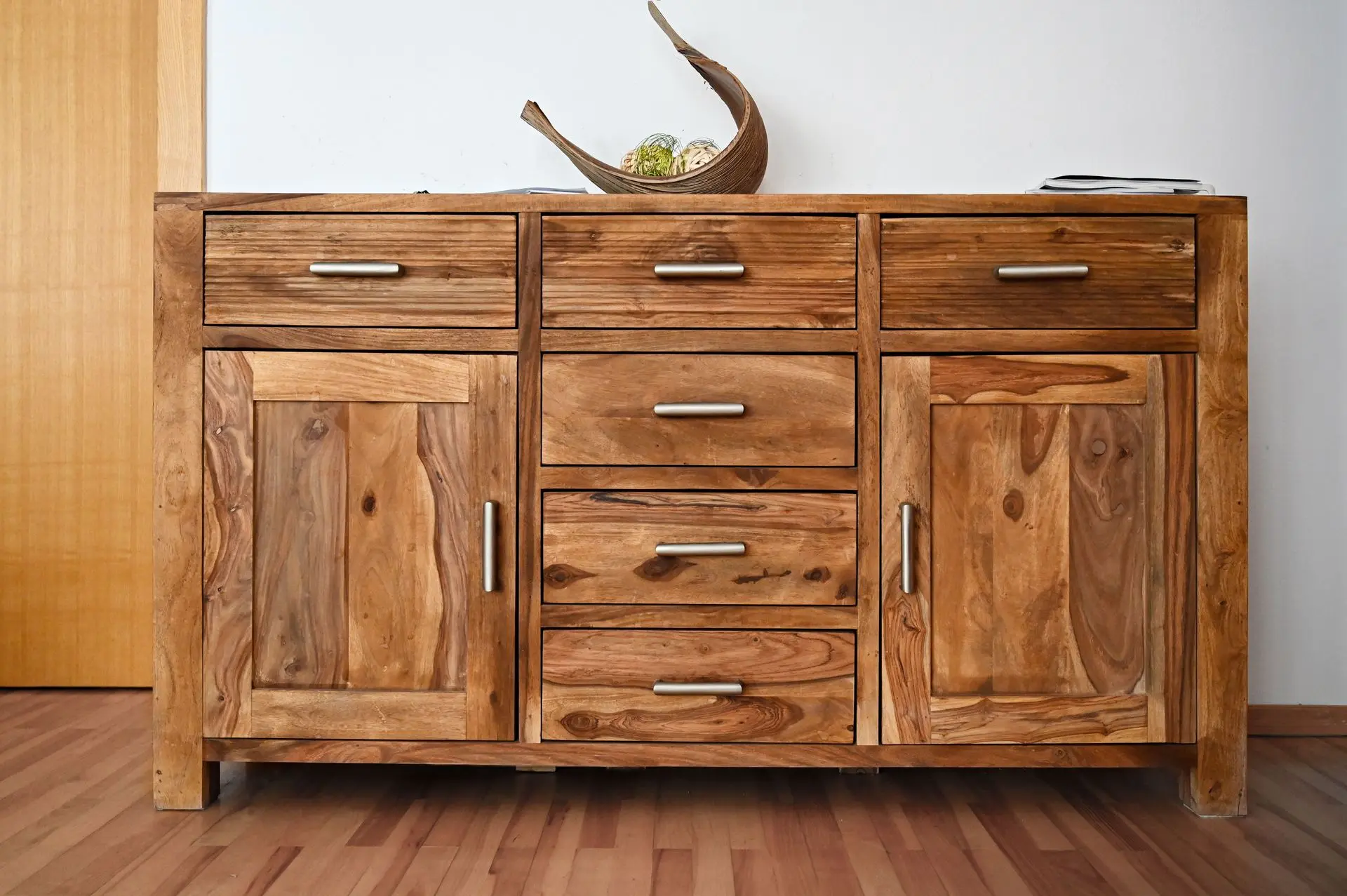
Solid Wood
Natural grain patterns, knots, and color variations of the wood are what make each piece unique. These features can be accentuated with the right finish, which will also help to protect the surface from regular use.
Either spray or hand application is effective using appropriate wood finishes. Spray application may be appropriate for a project where matching surfaces are desired, whereas hand-applied oils or other treatments may be appropriate for furniture where a specific natural appearance is desired.
- For instance, a wooden dining table can be treated with a finish that enhances the wood grain and provides adequate protection against stains and everyday use. The manufacturer should choose a product appropriate to the use of the table.
Wood Veneer
Wood veneer is a thin layer of actual wood that is placed on a base material. It makes furniture look like real wood and enables manufacturers to produce a variety of designs.
When working with veneer, be careful not to sand too hard, as it may be easily damaged. Manufacturers also need to monitor moisture and adhere to the coating manufacturer's preparation guidelines.
Matching veneer panels can be made to look the same with spray finishing. Selected details can be realized by skilled handwork, but the manufacturer should decide the method of application, depending on the coating and the design.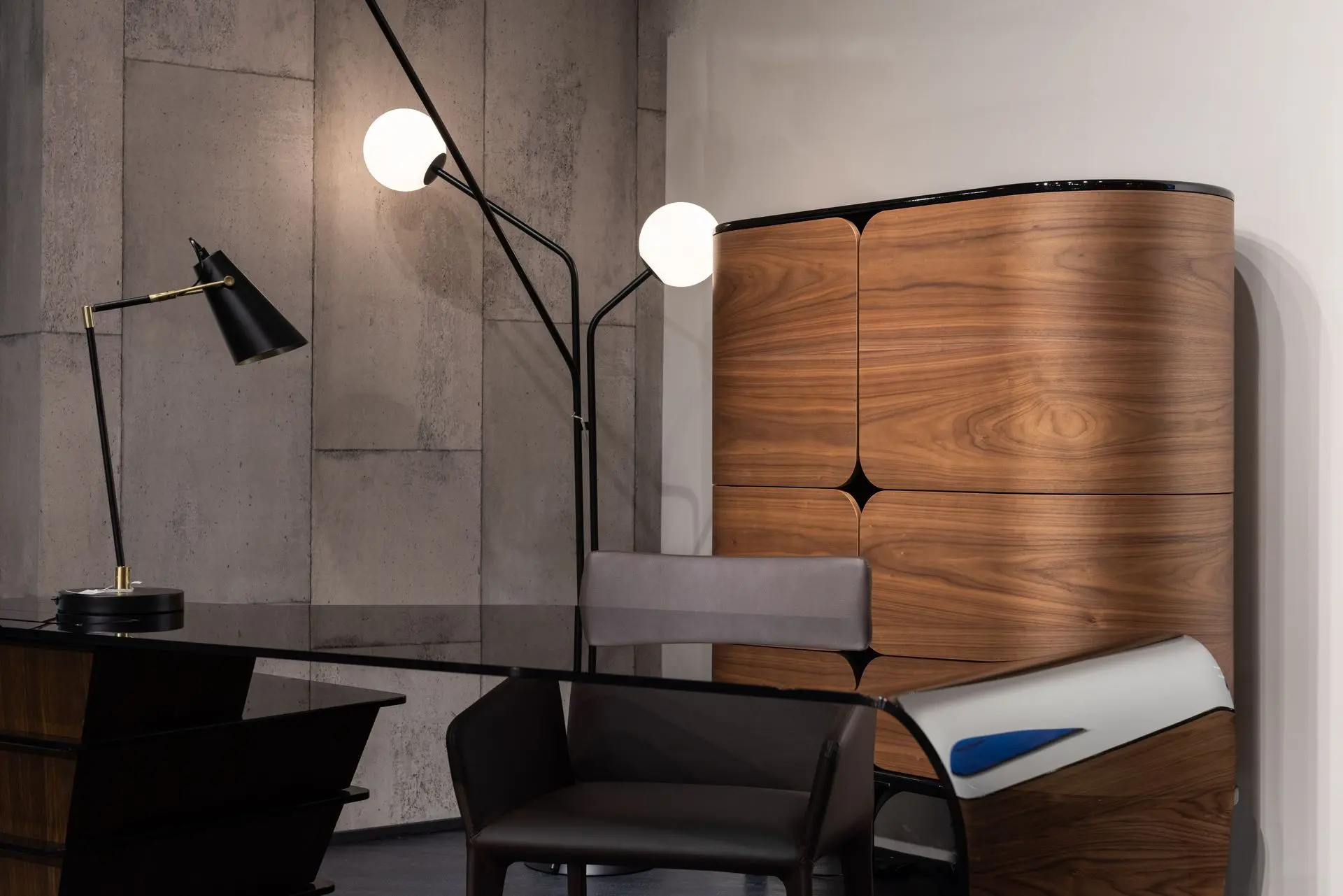
Lacquer Finishes
Lacquers can produce a smooth surface with varying degrees of shine, such as matte, satin, and gloss. Controlled coverage is often achieved by furniture manufacturers by using appropriate lacquer products sprayed across cabinet doors, wardrobes, and decorative panels.
But don't assume all lacquers can be applied in the same way. Always adhere to the technical instructions of the product used, such as preparation, application, ventilation, and curing.
If a high-gloss finish is required, request a sample, which will show the smoothness and reflectiveness that will be achieved on the project. Preparation and inspection are important, as scratches, dust and surface defects may be more noticeable on high gloss surfaces.
Melamine and Laminate Surfaces
Melamine and laminate surfaces typically have a factory-applied decorative finish. The color, pattern, or texture that the manufacturer chooses is typically decided at the material specification stage and not as a result of a traditional wood coating after the product has been built.
These surfaces can provide practical solutions for kitchens, wardrobes, offices, and other interior spaces where uniformity of look and ease of maintenance are important.
When selecting melamine or laminate, inquire with your manufacturer about edge treatments, cleaning needs, scratch resistance, and environmental conditions. Spray and/or hand finishing may not be required at all for the main surface.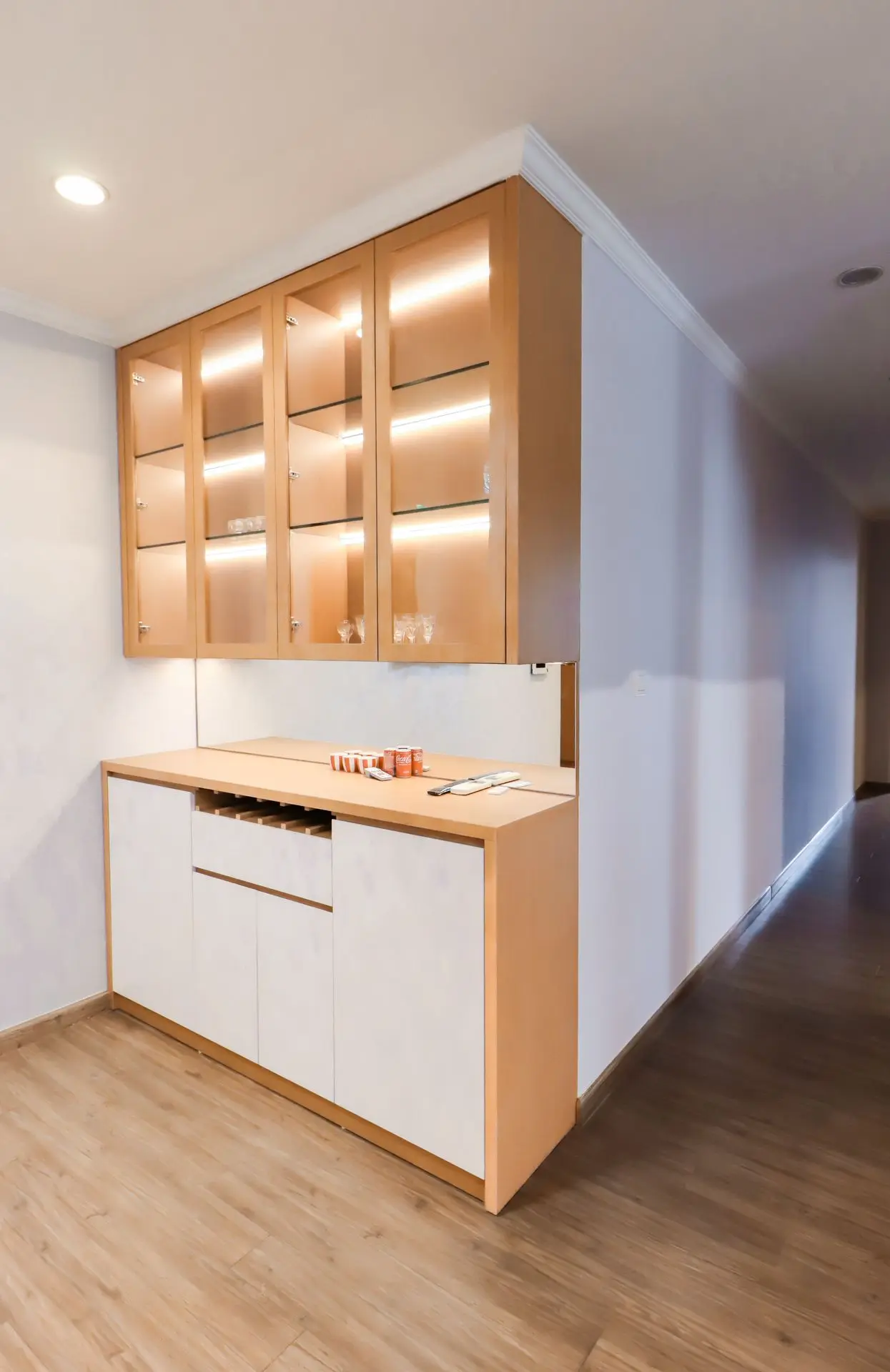
Which Furniture Finishing Method Works Best for Commercial Projects?
Commercial furniture projects may be more appropriate for spray finishing if a large number of identical pieces are needed, or for selected feature pieces where a special finish is required, hand finishing may be more appropriate. Consider durability, maintenance, production schedules and the circumstances in which people will use the furniture.
Here are some typical uses:
Project Type | Suitable Approach | What to Prioritize |
Hotel Wardrobes | Spraying of coatings on appropriate coated surfaces. | Matching color, repeatability, and cleaning requirements |
Apartment Kitchen Cabinets | Spray finishing of painted or lacquered parts | Uniform look and durability to daily use |
Bespoke Dining Tables | Spray or hand application, depending on the finish. | Grain appearance, spill resistance, and maintenance |
Decorative Reception Desks | A mix of strategies could be effective. | Design details, surface quality, and visual consistency |
Office Furniture | A uniform finishing or "mill finish" surface. | Durability, ease of cleaning, and production efficiency |
Traditional Wooden Furniture | Hand finishing, if the selected treatment allows for it. | The desired texture, wood character, and craftsmanship. |
For instance, a hotel developer might require the same wardrobes for 80 hotel rooms. The manufacturer may be able to achieve a consistent look on the project by using a standardized spray finishing process. The developer can then opt for a special hand-applied treatment on a few decorative items in the reception area.
This way, you can use the finishing process that is most suitable for each component instead of being limited by a single finishing method throughout the project.
Keep in mind, application alone does not make durability. How the finish performs is dependent on the coating formulation, surface preparation, curing and furniture construction, and maintenance routine.
How Can You Choose the Right Furniture Finishing Methods for Your Project?
 Start by defining the appearance you want, the material used for your furniture, and the environment in which it will be used. Then look at the available finishing options and compare them to your budget, quantity, and quality needs.
When talking to a furniture manufacturer, use this checklist to discuss your project.
1. Consider Your Order Quantity
When requiring dozens or hundreds of identical parts, inquire about a standardized spray process for greater consistency and production efficiency. If you are looking for a bespoke item, you may want to consider an appropriate hand-finishing method.
2. Define the Desired Appearance
Choose if you prefer a painted surface, a natural wood finish, a particular sheen or a unique decorative finish. Provide reference pictures and accept a physical sample prior to production.
3. Check the Material
There are different methods of preparation and finishing required for solid wood, veneer, engineered boards, and factory finished panels. Ensure that the coating you select is compatible with the substrate.
4. Assess Durability Requirements
Different furniture in hotel rooms, kitchens, and busy offices is exposed to varying degrees of wear, cleaning, moisture and contact. Select a coating based on the performance required, not just on looks.
5. Compare the Full Cost
Don't just focus on the first cost. Look at equipment, labor, waste of materials, production time, maintenance, and cost of defect correction. Sometimes, the lower initial price may not give the best value for the furniture's lifetime.
6. Agree on Quality Standards
Inquire about the manufacturer's testing of color, sheen, coverage, adhesion, and surface flaws. Set tolerances and an approval system in place prior to production.
7. Review a sample under realistic lighting.
Different types of lighting (daylight, warm, and cool LED) can create different finishes. Test the sample under conditions that are close to the actual space, particularly if furniture needs to be coordinated with flooring, wall panels, or other cabinetry.
- Expert Tip: Specify the approved finish, the material, the sheen level, and any quality requirements in your project specifications. Clear documentation enables designers, manufacturers, and project managers to achieve the same outcome.
How Do We Approach Furniture Finishes at Belosso?
At Belosso, we know that finish choice should reflect both your design and practical needs. We begin by figuring out what you want your custom furniture or architectural millwork to be used for, your material of choice, the look you are going for, and the quality you are seeking.
What works well for a decorative cabinet might not be appropriate for a hotel wardrobe that's used every day. Likewise, a coating that is attractive on a sample may not be suitable for all substrates and/or production processes.
A number of things should be taken into account before making a final decision:
- Material Compatibility: Make sure the selected finish is compatible with the wood, veneer, board or other substrate.
- Design Requirements: Choose the color, texture, and sheen that will complement your interior design.
- Production Consistency: Set up a consistent process for matching repeated components.
- Expected Use: think cleaning, use, moisture, and maintenance.
- Sample Approval: Check the proposed final product before making the commitment to the production run.
At Belosso, we understand that a successful furniture project involves more than an attractive finish. We work towards ensuring materials, finishes, and manufacturing are in line with the requirements of the project.
Conclusion: Choosing the Right Furniture Finishing Methods
The most effective furniture finishing methods will depend on the desired outcome. Larger projects may benefit from spray finishing for efficiency and repeatability, while hand finishing allows for more precise application of selected details and specialized treatments. Both methods can be excellent if workers are competent and use appropriate materials and a controlled process.
At Belosso, we assist you in thinking about the materials, finishes, design needs, and uses of your custom furniture or architectural millwork. Contact our team and discuss your project needs and explore finish options that meet your design vision, quality expectations, and production requirements. If you select the right method from the start, you will have a more uniform look and end up with a product that fits your space.
Frequently Asked Questions About Furniture Finishing Methods
1. Is spray finishing better than hand finishing?
Spray finishing is a good choice for projects that require uniform coatings on numerous furniture parts. For some traditional treatments, decorative finishes and special details, hand finishing may be more effective. The choice should be made based on your material, design, coating, and production requirements.
2. Which furniture finishing method provides the most consistent results?
Spray finishing can help ensure uniform color and sheen over high-volume production volumes. Manufacturers, however, must still follow good surface preparation, application controls, working conditions and quality checks to ensure reliable results.
3. Does hand-finished furniture have better quality?
No, hand application is not necessarily better quality. The spray finish can be very good if it is done correctly, and a craftsman can produce unique finishes with hand techniques. The final quality is determined by the materials, workmanship, coating and finishing process.
4. Which finishing method lasts longer?
Neither method automatically produces a more durable finish than the other. Durability will vary based on the type of coating used, surface preparation, application quality, curing and usage and maintenance of the furniture. Select a finish that will suit the environment your furniture will experience.
5. Can manufacturers combine spray finishing and hand finishing?
Yes. Both methods can be used by the manufacturer if the products and processes chosen allow for this. For instance, they can apply an appropriate coating over large panels and apply hand-coatings to particular decorative features. Before mixing products, the manufacturer should verify the compatibility.
6. Is spray finishing more expensive than hand finishing?
Equipment, labor, quantity of production, coating materials, and workspace requirements are all factors in the total cost. Spray finishing might be more efficient for larger quantities, and hand finishing might be more appropriate for smaller quantities or special finishes. Look at the total project cost, not just the cost of the application.
7. Which furniture finishing method is best for hotel furniture?
Spray finishing is a good solution for hotel furniture where matching wardrobes, bedside tables, desks, and cabinets are needed in a large number of rooms. The manufacturer should, however, choose a suitable coating depending on the cleaning requirements, the anticipated wear, the compatibility of the materials, and the design requirements of the hotel.
8. How can you maintain a consistent finish across custom furniture?
Accept a physical sample, write the coating specifications, define acceptable color and sheen variations, and monitor parts during production. Maintain uniformity of cleaning and maintenance directions, too. These measures minimize undesirable variations between similar furniture parts.