The hotel millwork design does more than just make a hotel room look polished. The right design can make housekeeping and maintenance jobs more efficient, allow maintenance staff to more easily access hidden services, and make damaged components more easily replaceable or repairable. These small design details can save time and minimize issues in a busy hotel.
At Belosso, we know that hotel millwork must serve the guest, as well as the teams that keep the hotel operational. We can integrate practical access, durable materials, clever storage, and elegant finishes into our hospitality millwork solutions to ensure that your millwork continues to perform long after it's installed.
What Is Hotel Millwork Design?
Hotel millwork design involves planning and customizing built-in furniture and architectural elements for hotel spaces, considering their appearance, function, durability, and maintenance.
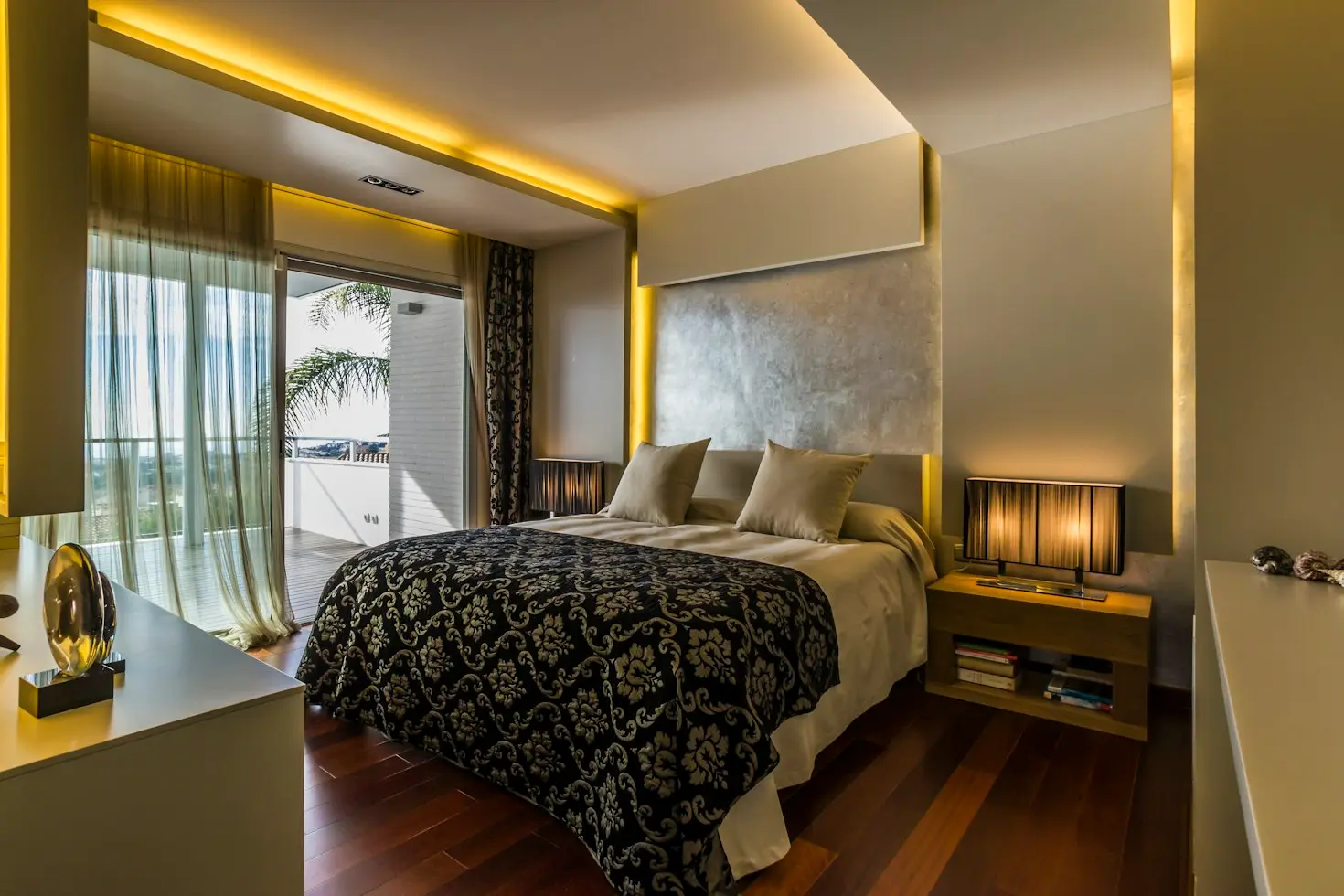
Millwork in a hotel may feature wardrobes, bathroom vanities, reception desks, headboards, wall panels, cabinets, desks, shelving and more.
Millwork is different from regular furniture because it can actually be a part of the room. This makes the design phase particularly crucial. Once installed, a built-in unit will require working around it for years.
For instance, a hotel wardrobe might seem like a straightforward one. But housekeeping staff need to clean its shelves and floor area. Hinges or lighting may need to be replaced by maintenance staff. The doors can be pulled, pushed and used hundreds of times by guests.
Thus, when it comes to hotel millwork, it's not just about what the guests see.
It asks:
- Is it easy to clean by housekeeping?
- Is there access to maintenance for key components?
- Are staff able to replace any damaged hardware?
- Is the finish able to withstand frequent cleaning?
- Is it possible to fix a part without replacing the entire unit?
- These questions involve serviceability in the design.
Why Does Serviceability Matter in Hotel Millwork?
Serviceability is important because hotel millwork is used, cleaned, inspected and repaired on a regular basis. A functional design enables your team to perform these tasks without any unnecessary disruptions.
Consider a hotel room that is turned over several times a week. Housekeeping is cleaning the same surfaces over and over again. Guests use doors and drawers, move chairs and engage with built-in furniture on a daily basis.
Even the best millwork requires maintenance over time.
A hinge can loosen. Drawers that have a runner can break. A plumbing connection can get into trouble. The surface may be damaged. The light or electrical part may require replacement.
Your maintenance team can easily access it, and they will quickly solve the problem.
If the design is to place all of the components behind permanent construction, even a small repair can be a large job.
How Does Hotel Millwork Improve Housekeeping Efficiency?
When hotel millwork allows housekeeping to easily access surfaces and minimizes hard to reach areas, gaps, and obstacles, it enhances housekeeping efficiency.
Housekeeping staff is under time pressure. Each additional movement counts.
If a corner is hard to reach, a cleaner shouldn't have to move several pieces of furniture to do it. They should not require any special tools to access an area to collect dust daily.
Housekeeping can be taken into account in the design stage to improve the cleaning process.
- For instance, a built-in cabinet that extends just about to the ground. Dust and debris can accumulate under the design if it allows a narrow space that is hard to reach. A cleaner might have difficulty getting to it.
A more satisfactory alternative can be a well-designed base detail that either eliminates the gap or allows sufficient clearance for normal cleaning equipment.
It's as simple as it sounds: to make the room easier to clean, but not at the expense of the room's appearance.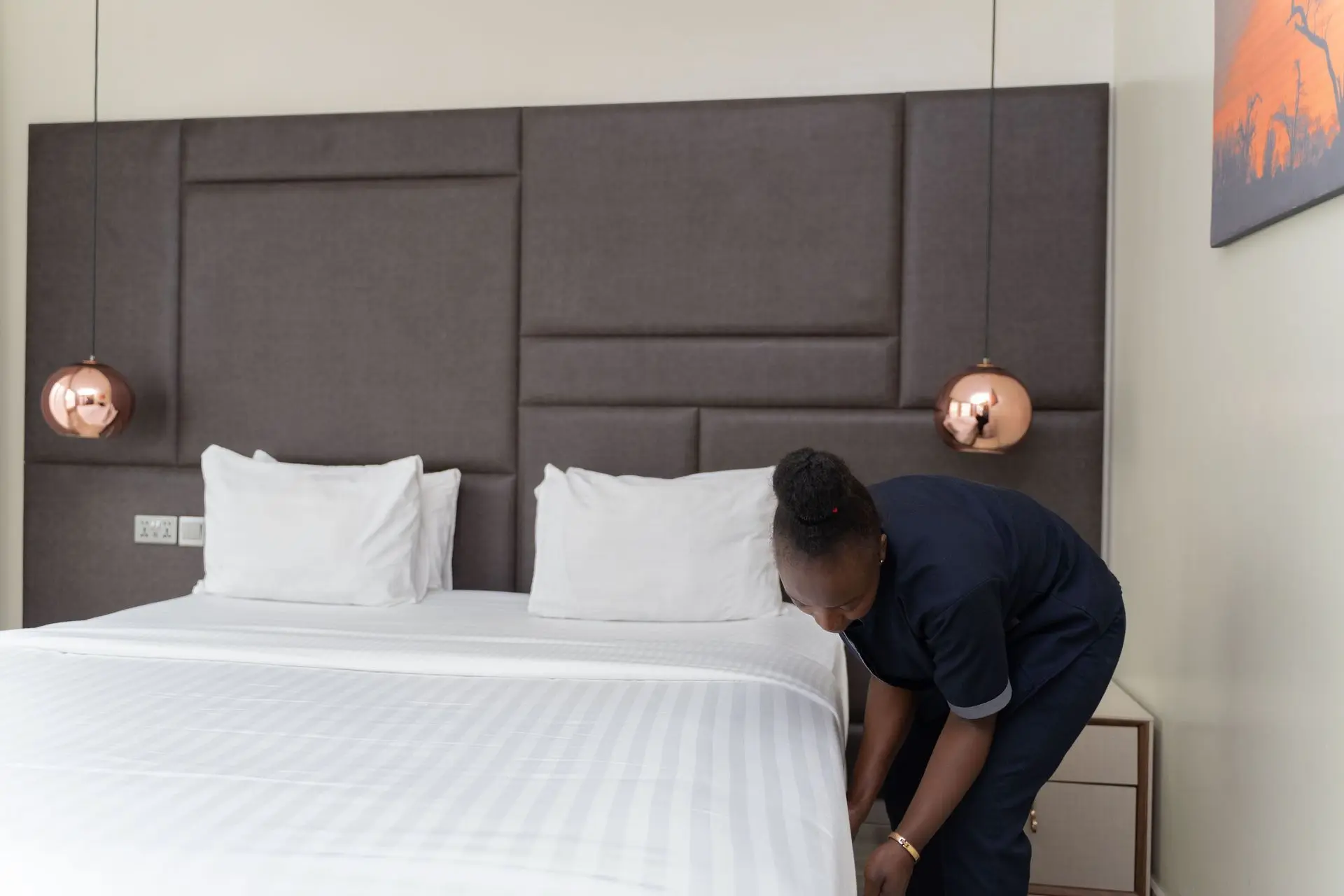
What Hotel Millwork Design Principles Help Housekeeping?
The ideal hotel millwork design will provide easy access for housekeeping staff, streamlined surfaces, functional dimensions, and fewer hiding spots for dust and dirt.
There are a number of principles you may use in the planning.
Keep Cleaning Surfaces Easy to Reach
Avoid unnecessary recesses and complicated shapes if they are not for a functional purpose.
Dozens of small ledges, deep grooves or narrow spaces are not needed to create a beautiful design. These details can add time to clean and provide areas for dust to collect.
For instance, a wall-mounted shelf with clean edges may need less cleaning than one with multiple decorative recesses.
Avoid Dust-Trapping Details
Inquire about the fate of the dust once the hotel is opened.
Dirt can accumulate in deep recesses, unused ledges, exposed joints and odd corners. These areas should be taken into consideration before and not after fabrication.
A great question to ask during a design review is
“Is this area easily accessible for the housekeeper to clean with normal cleaning equipment?”
If it's no, find another detail.
Design for Floor Cleaning
There is a small but significant serviceability problem that can occur due to floor access.
A millwork that is flush with the floor may make some aspects of the visuals easier, while other designs might benefit from a well thought out recessed base or clearance.
This depends on the room, how it is cleaned, how moist it is, and what design you want.
Reduce Furniture Movement
Housekeeping should not be required to unnecessarily move heavy built-in or loose furniture.
Design the placement of desks, wardrobes, cabinets and other items in a way that allows the cleaners to reach around the room without having to rearrange the space too often.
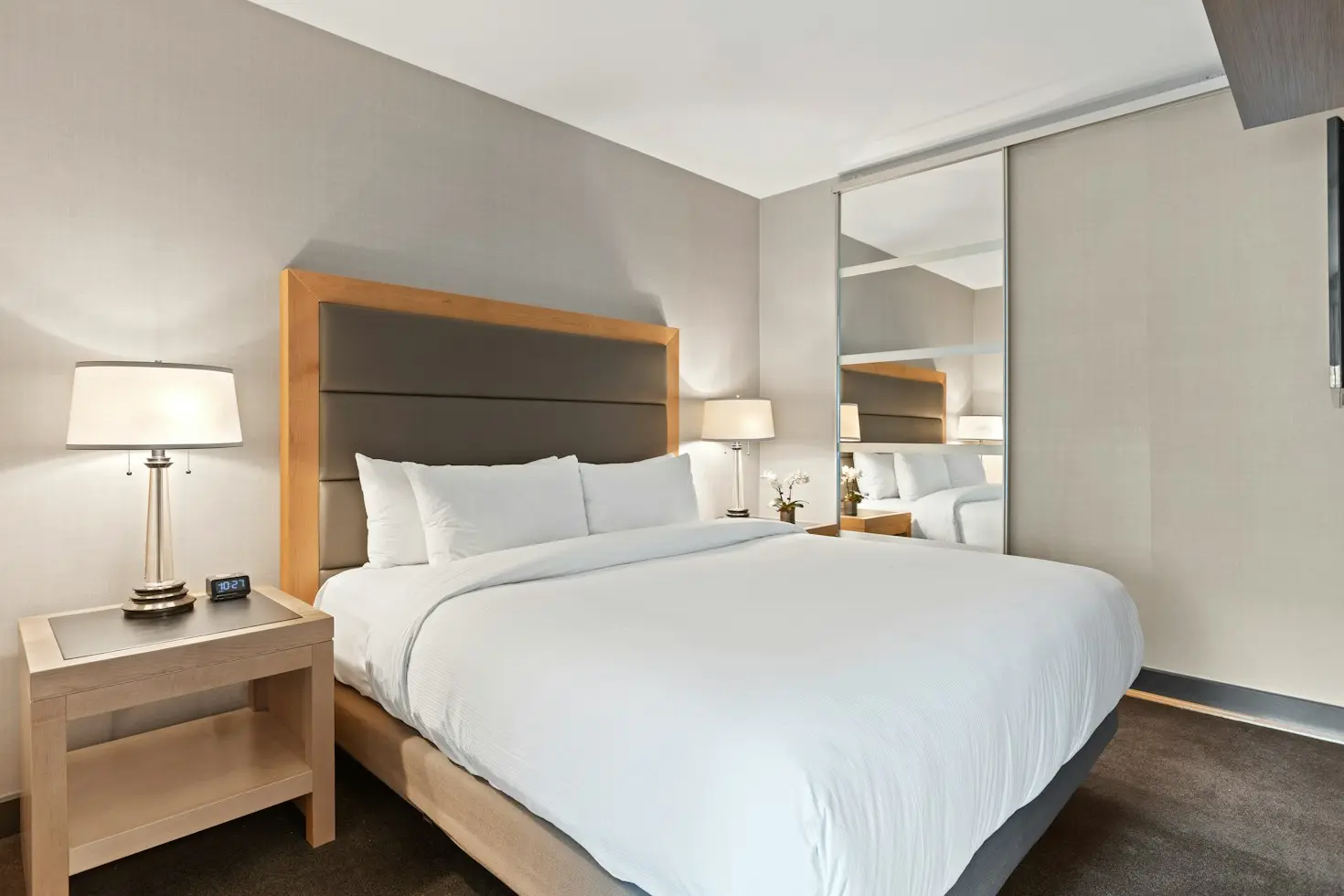
Which Materials Work Best for Hotel Millwork?
While the type of material will vary depending on the location and use, hotel millwork should be made of materials that are durable and can be cleaned regularly and used often.
No one material is ideal for all hotel uses.
Bedroom wardrobes are different from bathroom vanities. A reception desk is subject to wear and tear that is different from a guest-room cabinet.
When choosing materials, think about:
- Frequency of use
- Cleaning products
- Moisture exposure
- Impact
- Scratching
- Heat
- Surface appearance
- Expected service life
- Ease of repair
Why Do Easy-Clean Surfaces Matter?
Housekeeping personnel in hotels clean surfaces regularly. A finish that is attractive in a showroom can be an issue if it stains or if it needs special care.
The finish should be coordinated with the cleaning program.
High touch surfaces, such as desk surfaces, drawer front finishes, handles, and reception counters, for instance, require finishes that can withstand multiple touches and cleaning.
How Does Moisture Affect Hotel Millwork?
Bathrooms pose another challenge as materials, joints, edges, hardware, and finishes can be impacted by humidity and water.
Bathroom vanities require attention to detail around sinks and plumbing.
For instance, a vanity could appear flawless from the front, but if the area around the plumbing access isn't properly detailed, it could lead to maintenance issues down the road.
Good design takes into account what's seen and what isn't.
How Can You Design Hotel Millwork for Easy Repairs?
Install hotel millwork that allows for easy access to service areas, easy replacement of hardware and removal of components, and enables maintenance staff to repair individual components without harming the entire unit.
This principle can make a big impact throughout the lifespan of a hotel.
Think of a built-in desk with an electrical outlet. The outlet does need to be replaced at some point.
When the design permits easy access, a technician can access the component and repair it.
If the design is such that the electrical connection is permanently sealed within the millwork, the technician may have to remove or damage other components.
Use Accessible Panels Where Needed
Access panels can be used to gain access to plumbing, electrical connections, lighting and other hidden services.
There is no need to make these panels conspicuous.
They can be incorporated into the design to provide a clean and seamless finish for guests while still allowing for easy access for maintenance personnel.
Choose Replaceable Hardware
Furniture in hotels is used over and over.
Over time hinges, drawer runners, handles, locks and other hardware may need to be replaced.
The practical and replaceable components will facilitate future repairs.
For instance, if a hinge on a wardrobe fails, your maintenance staff should be able to replace the hinge, not the whole wardrobe door system.
Design for Component Replacement
A serviceable design is designed in parts.
Don't ask, “How can we make this unit permanent?” Ask:
“What are some components that may need to be replaced in five years?”
That one question can impact hardware, access points, joints, panels and installation techniques.
Which Hotel Millwork Areas Need the Most Attention?
Guest-room wardrobes, bathroom vanities, headboards, desks, cabinets and reception millwork require special consideration for serviceability since they are used often by staff.
Operational challenges vary from area to area.
Hotel Wardrobes and Storage
Wardrobes are regularly used by guests and housekeeping is done regularly.
Consider:
- Durable door hardware
- Easy-to-clean interiors
- Accessible shelves
- Replaceable hanging systems
- Practical lighting access
- Solid hinges and runners
The wardrobe should be one that will support the guest but not add to the work of housekeeping and maintenance.
Bathroom Vanities
Bathroom vanities require special attention as they are a mix of furniture, water, plumbing, and daily use.
Consider:
- Moisture-resistant materials
- Durable finishes
- Easy plumbing access
- Cleanable surfaces
- Accessible service areas
- Durable hardware
For instance, if a plumbing connection is located behind a permanently installed cabinet, a small leak can be a problem.
Headboards and Wall Millwork
Headboards can incorporate lighting, electrical connections, charging stations, decorative panels, and more.
Access is crucial to that.
Technical aspects can be concealed in a well-planned headboard and be accessible for maintenance personnel as necessary.
Desks and Built-In Cabinets
Guest contact is made with desks frequently. They use them to work, eat, charge devices and store personal belongings.
Durability is a factor to consider around:
- Desktop surfaces
- Drawers
- Power outlets
- Cable management
- Hardware
- Edges and corners
How Should You Design Hotel Millwork for Maintenance Teams?
Maintenance access to critical components should be coordinated with millwork prior to fabrication with electrical, plumbing, HVAC, and other building services.
Millwork should not stand alone from the rest of the building.
For instance, let's consider a vanity design that is ideal on a drawing. The plumbing crew then finds out that the pipe needs to be installed in a location that is in conflict with the cabinet structure.
That issue can result in changes, delays, and/or access difficulties.
These problems can be avoided by early coordination.
Coordinate Millwork With MEP Services
MEP coordination should be done prior to fabrication.
Review:
- Electrical outlets
- Wiring
- Plumbing
- Lighting
- HVAC requirements
- Access panels
- Equipment clearances
This will help to avoid any costly changes after installation.
Keep Service Access Discreet
There's no need to compromise between looks and care.
A good access panel can be integrated into the other millwork.
For instance, a removable panel can be finished in the same way as the cabinet itself and provide access for maintenance staff to plumbing or electrical components.
Standardize Frequently Replaced Components
For a hotel that has the same hardware in similar rooms, maintenance teams can work more efficiently.
For instance, if you use the same kind of drawer runner for various types of rooms, it can make it easier to fix and replace them.
It can also facilitate the management of spare parts.
How Can Millwork Layout Improve Housekeeping Workflow?
A practical millwork layout allows for easy circulation and convenient storage for staff and minimizes any unessential movement during room cleaning.
The layout of a room is the beginning of good serviceability.
Suppose there are two identical hotel rooms.
The wardrobe, desk, and storage units in Room A provide tight circulation. The cleaner has to maneuver around a number of obstacles.
The same functions in Room B are in a more logical arrangement. The cleaner can flow naturally from one area to another.
The second room may be virtually the same as a guest room, but it has the potential to provide an improved workflow for staff.
Keep Housekeeping Routes Clear
Take into account the way in which housekeeping personnel enter, clean, move equipment and exit the room.
Millwork shouldn't be a hindrance.
This is even more important in a smaller guest room where space is more critical to movement.
Put Storage Where Staff Need It
The location of storage should facilitate the actual workflow.
For instance, if a particular piece of equipment is in a difficult-to-reach spot, employees could be wasting time trying to reach it or maneuver around other furniture.
Good design takes into account the guest's use and the hotel's day-to-day operations.
Consider Back-of-House Requirements
While most of the design is focused on the guest rooms, the staff rooms also need practical millwork.
Operational millwork such as storage cabinets, service counters, housekeeping stations and more can help staff to be more productive.
What Are Common Hotel Millwork Design Mistakes?
Some of the most frequent errors are giving more importance to the looks than to maintenance, designing hard-to-clean areas, concealing services without access and installing finishes and hardware that are not able to withstand hotel use.
Below are some issues that should be addressed prior to fabrication.
Common Mistake | Operational Problem | Better Approach |
Deep, narrow gaps | Difficult cleaning | Provide practical access. |
Permanently sealed service areas | Difficult repairs | Add discreet access. |
Fragile finishes | Early wear | Match finish to usage |
Non-standard hardware | Harder replacement | Utilize practical and consistent components. |
Poor MEP coordination | Installation conflicts | Coordinate before fabrication |
Complex decorative details | More cleaning time | Keep details purposeful. |
Fixed components everywhere | Difficult repairs | Provide for replacement where necessary. |
How Do You Balance Hotel Millwork Aesthetics With Serviceability?
One way to do this is to conceal practical features in a clean design instead of eliminating features. Serviceability doesn't imply that your hotel should be industrial.
It is not too late to make elegant high-end interiors.
For instance, the access panel can be the same finish as the surrounding finish. A cable-management system can be hidden. Sleek texture and color can be achieved with durable materials.
It all comes down to planning.
Integrate Access Panels Into the Design
Rather than an afterthought, design a visible panel with the surrounding millwork.
This method can produce a cleaner output.
Choose Durable Finishes That Support the Design
Durability doesn't have to be boring.
Finishes can be chosen to reflect the hotel's image and appeal, as well as cleaning, wear and maintenance needs.
Coordinate Details Before Fabrication
The further along in the millwork process, the more difficult and costly it is to make significant design changes.
Discuss serviceability at the design phase.
Have the architect, interior designer, contractor, millwork team and maintenance representatives recognize potential issues early on.
Why Does Custom Millwork Help Hotel Operations?
Custom millwork can assist hotels in integrating their unique space, brand, customer service and hotel needs into one cohesive solution.
Each hotel will have room sizes, layouts, brand standards, materials and operational requirements that are different.
While off-the-shelf furniture might be the solution to a simple storage issue, custom millwork can combine multiple functions into a single design.
One wall of a guest room could be a mix of, for instance:
- Wardrobe storage
- Open shelving
- A work desk
- Lighting
- Power outlets
- Decorative panels
- Cable management
These functions can be handled by a custom solution rather than as individual items.
Belosso's mind-set for hospitality millwork is design and performance. Our tailor-made solutions can meet the practical needs of hotel settings while keeping the elegant appearance that is expected by the guests.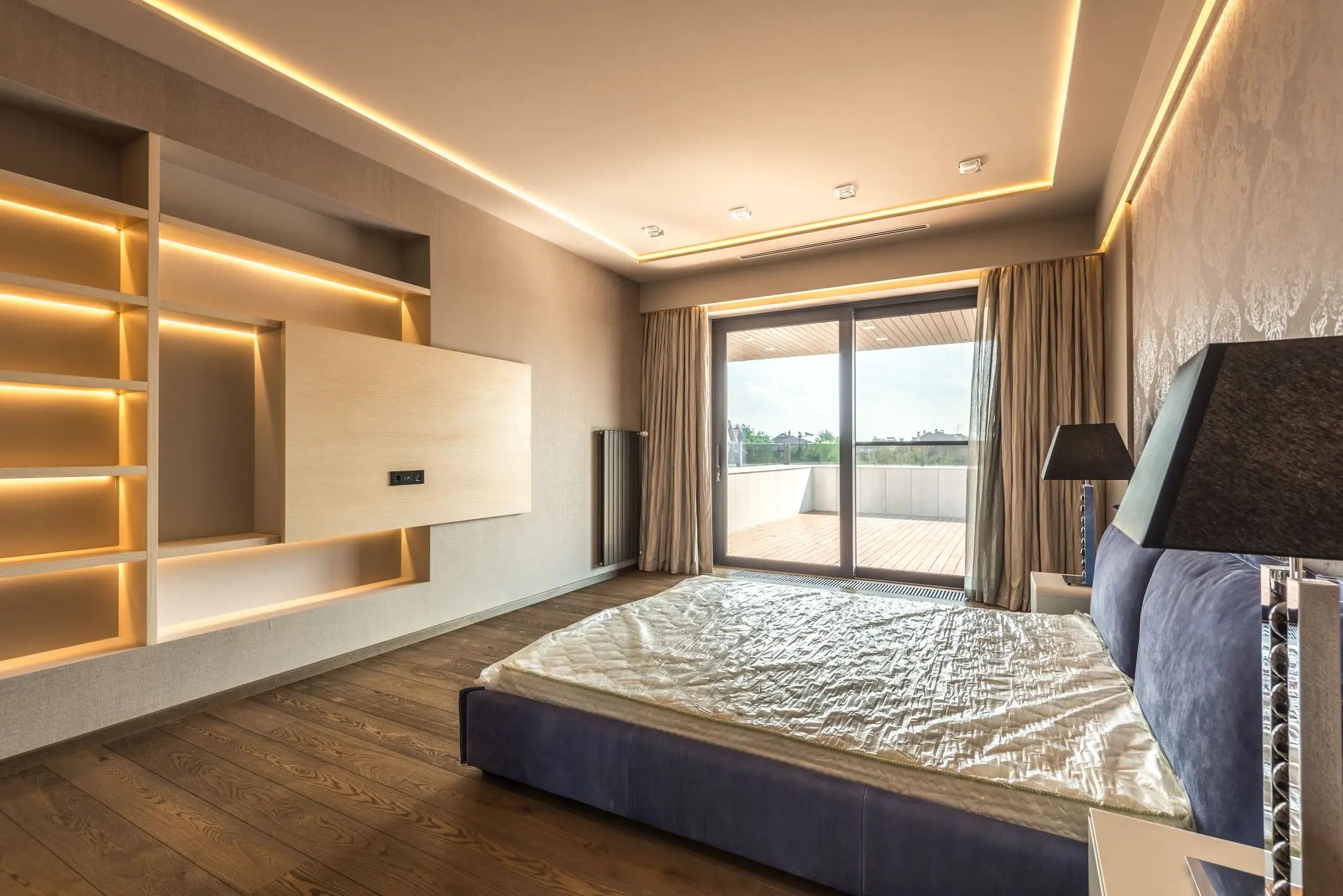
Hotel Millwork Design: A Practical Serviceability Checklist
Here are some questions you should ask yourself before approving your hotel millwork design:
- Are all critical surfaces easily accessible for housekeeping to clean?
- Are staff able to access hard-to-reach corners and floor areas?
- Is the material appropriate for the environment of the room?
- Is there access for maintenance to plumbing and electrical?
- Are there common hardware components that can be replaced by technicians?
- Are there parts that can be replaced individually if they are damaged?
- Is there adequate room for normal staff movement around the millwork?
- Have you scheduled millwork with MEP services?
- Are access panels going to be a part of the finished design?
- Can the finishes withstand regular hotel cleaning?
- Get the design checked by maintenance and housekeeping personnel?
- Will the design continue to function in a practical manner over the years?
This checklist may help you identify serviceability issues prior to fabrication and installation.
Expert Tips for More Serviceable Hotel Millwork
Involving operational teams early and designing all the elements of the millwork around how it will actually be used daily is the best way to improve serviceability.
Here are some practical tips:
Tip 1: Ask housekeeping for feedback.
Housekeeping staff are aware of the cleaning issues more than any other person who has to cope with them on a daily basis.
Tip 2: Think beyond installation day.
Inquire about the performance of the millwork after 1 year, 5 years and 10 years.
Tip 3: Design around replacement.
There will be a need for hardware and electrical attention. Prepare for it.
Tip 4: Keep access practical.
Don't obscure critical services to such an extent that they are inaccessible to technicians.
Tip 5: Match materials to the environment.
Apply finishes and materials as per moisture, traffic, cleaning and impact.
Tip 6: Keep decorative details purposeful.
Additional ledges, recesses, or grooves can provide additional surfaces to be cleaned by housekeeping.
Tip 7: Coordinate early.
Solve problems between millwork and building services prior to fabrication.
Final Takeaway: Design Hotel Millwork for the People Who Maintain It
The top hotel millwork design isn't just about creating a beautiful guest experience. It also facilitates day-to-day hotel operations. Millwork designed from the ground up for housekeeping access, durability, maintenance, replaceable parts and staff workflow will last for years.
At Belosso we focus on creating our hospitality millwork to the true needs of a hotel setting while also delivering the elegant look your project deserves. For any hotel, resort, serviced apartment, or other hospitality project, consult our team to discuss your custom millwork needs and to create a solution that will assist you with your design and long-term operation.
When every detail counts, a hotel is an ideal place to be. So should your millwork.
FAQs
What is the most important consideration in hotel millwork design?
When creating hotel millwork, aesthetics should not be the only thing considered; serviceability, durability, and function should also be included. The millwork should be both appealing to visitors and serviceable to housekeeping and maintenance staff for cleaning, inspection, repairs and use.
How can hotel millwork improve housekeeping efficiency?
Hotel millwork can enhance the efficiency of the housekeeping staff by minimizing hard to reach areas, easy-to-clean surfaces and furniture that needs to be moved during cleaning.
What materials are best for hotel millwork?
The most suitable material can be used depending on the purpose. Durability, moisture exposure, cleaning requirements, impact, appearance, and long term maintenance should be considered prior to choosing a material or finish.
How do you make hotel millwork easier to maintain?
Provide easy-to-access service panels, replaceable components, durable finishes, functional joints, and designs that permit repair or replacement of individual parts.
Should hotel millwork include access panels?
Yes, if future access is needed for hidden plumbing, electrical, lighting or other service features. Access panels can be incorporated into the design to minimize their appearance.
How can hotel millwork reduce long-term maintenance problems?
With the right materials, advance planning of services, standardization of replaceable parts and convenient access for technicians to areas where maintenance may be needed in the future, hotel millwork can minimize maintenance issues.
What is architectural millwork in a hotel?
Architectural millwork is the term used for custom-made items that are incorporated into the interior design of the hotel. These include reception desks, wall paneling, built-in wardrobes, vanities, cabinets, shelving and other built-in furniture.
How does hotel millwork differ from regular furniture?
Hotel millwork frequently becomes a seamless part of the hotel building and is designed to meet particular space, use and design needs. Typically, regular furniture is movable and not as coordinated with building services.
How can hotels make millwork more sustainable?
Hotels should take into account the use of durable materials, long service life, repairable parts, responsible material sourcing and designs that enable individual parts to be replaced instead of the whole unit.
When should you consider serviceability in hotel millwork design?
Serviceability should be taken into consideration from the outset of the design and not after installation. Early planning provides your team with greater access, material selection, hardware, MEP coordination, and maintenance options.