The first step in selecting the right reception desk materials is to understand how they perform in a high-traffic commercial setting. It's the focal point of the room. The first design element that visitors see when they enter a hotel, office, showroom, or commercial building is the reception desk.
The best reception desk materials do not simply look appealing. They should work together, handle daily use, support the desk structure, and match the character of your brand. This is why a blend of stone, metal and wood can produce a more potent effect than using one material alone. Stone provides strength and weight, wood adds warmth and texture, and metal adds structure and clean detail.
When building a custom reception desk, we can help you choose and mix materials based on the design, function and performance requirements of your project. At Belosso, we are dedicated to developing combinations of materials that feel purposeful and can be used commercially.
What Are the Best Reception Desk Materials for Mixed-Material Design?
There is no single material that works best for every reception desk. The choice depends on traffic, maintenance, design style, budget, and structural requirements. You can also compare different reception counter materials when evaluating durability and appearance.
Stone, wood, and metal are all used for a specific purpose when it comes to a mixed-material reception desk.
Material | Main Strength | Common Reception Desk Use |
Stone | Durability and visual impact | Countertops, front panels, feature areas |
Wood | Warmth and natural texture | Front panels, cabinetry, decorative surfaces |
Metal | Structure and precision | Frames, trims, edging, reveals |
Solid surface | Seamless appearance | A curved feature and countertops. |
Wood veneer | Natural look and flexibility in design. | Front panels and cabinetry |
The right reception desk materials should be a blend of style, durability, maintenance, and functionality for your commercial space.
Stone is particularly effective in areas demanding an excellent, high-quality look. Wood tones down the coldness or businesslike atmosphere of the space. Metal provides sharp edges and adds a contemporary touch to the design.
You do not need to use the same amount of each of the three. Indeed, the most effective designs typically assign specific functions to each material.
How to Choose Reception Desk Materials for Stone, Wood and Metal
A reception desk made of a variety of materials brings contrast. The desk doesn't look dull and two-dimensional but rather changes color, texture and weight visually.
When combined strategically, stone provides structural presence, wood is warm, and metal is precise. Combined, these qualities make for a professional and welcoming reception desk.
Create Contrast Without Losing Cohesion
A warm walnut finish can be complemented with a cool stone surface and dark metal trim. The difference heightens the visual impact of each material.
The materials should have some common ground, however. They can be linked by color, texture, shape or finish.
For instance, a cream-colored stone can be a great complement to natural oak and champagne-colored metal, as all three combine for a warm palette.
Give Each Material a Specific Job
Avoid selecting materials based on their appearance in a sample.
Instead, ask:
- Which surface has the greatest contact?
- What element of the image needs to be the focal point?
- What parts of the structure require reinforcement?
- Which surfaces require easy cleaning?
- Which is the best material that represents the brand?
This will enable you to plan the desk as a unified system.
Create a Stronger Brand Statement
Your reception desk can speak your brand even before your receptionist speaks.
A luxurious hotel might employ dramatic stone, opulent walnut, and brass accents. Light stone, oak veneer and black metal are suitable for a technology company. A creative studio can go with a textured wood, sculptural metal and a bold stone surface.
Today's interior design also looks for multi-layered materials, natural textures, and the use of warmer color schemes over uniform spaces.
How to Use Stone in Reception Desk Design
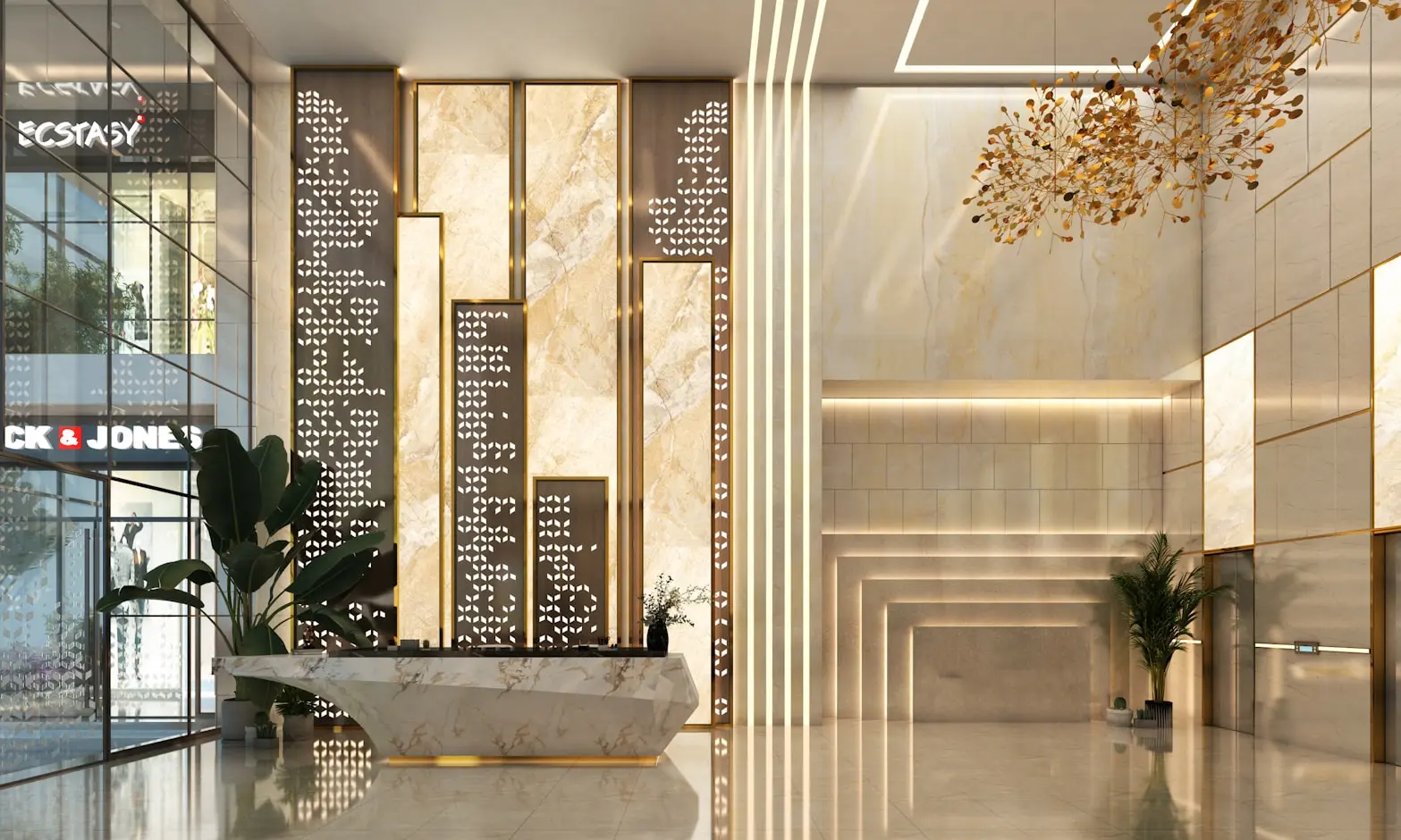
Stone can provide a solid focal point for your reception. Natural stone or engineered surfaces can be used depending on the desired performance and maintenance requirements for the project.
Common choices include:
- Marble
- Granite
- Quartz
- Sintered stone
- Porcelain surfaces
- Solid surface materials
Stone Countertops and Transaction Surfaces
Visitors and staff touch the countertop often, so durability and maintenance should be taken into account when selecting a countertop surface.
Other engineered surfaces like quartz can offer uniform colors and patterns. Natural stone like granite and marble can provide a more unique look but should be taken into account when specifying for maintenance.
Marble can be used to make an elegant reception desk, but it can also be more prone to etching and staining than other materials that might be used. You should therefore use the same material that is required for the space.
Stone Feature Panels
Stone can also be used on the front of the reception desk.
The full-height stone panel can be used to create a dramatic focal point. A smaller stone section can offer contrast without overpowering the space.
You can also use:
- Waterfall edges
- Bookmatched patterns
- Veined feature panels
- Thin stone-look surfaces
- The combination of stone strips and wood.
How to Balance Heavy Stone Visually
When using a dark color or dramatic veining, stone can appear very heavy in visual terms. Wood can help to temper that effect.
A dark stone countertop, for instance, with warm walnut panels can help to achieve a balanced look. A thin metal trim can then outline the connection between the two materials.
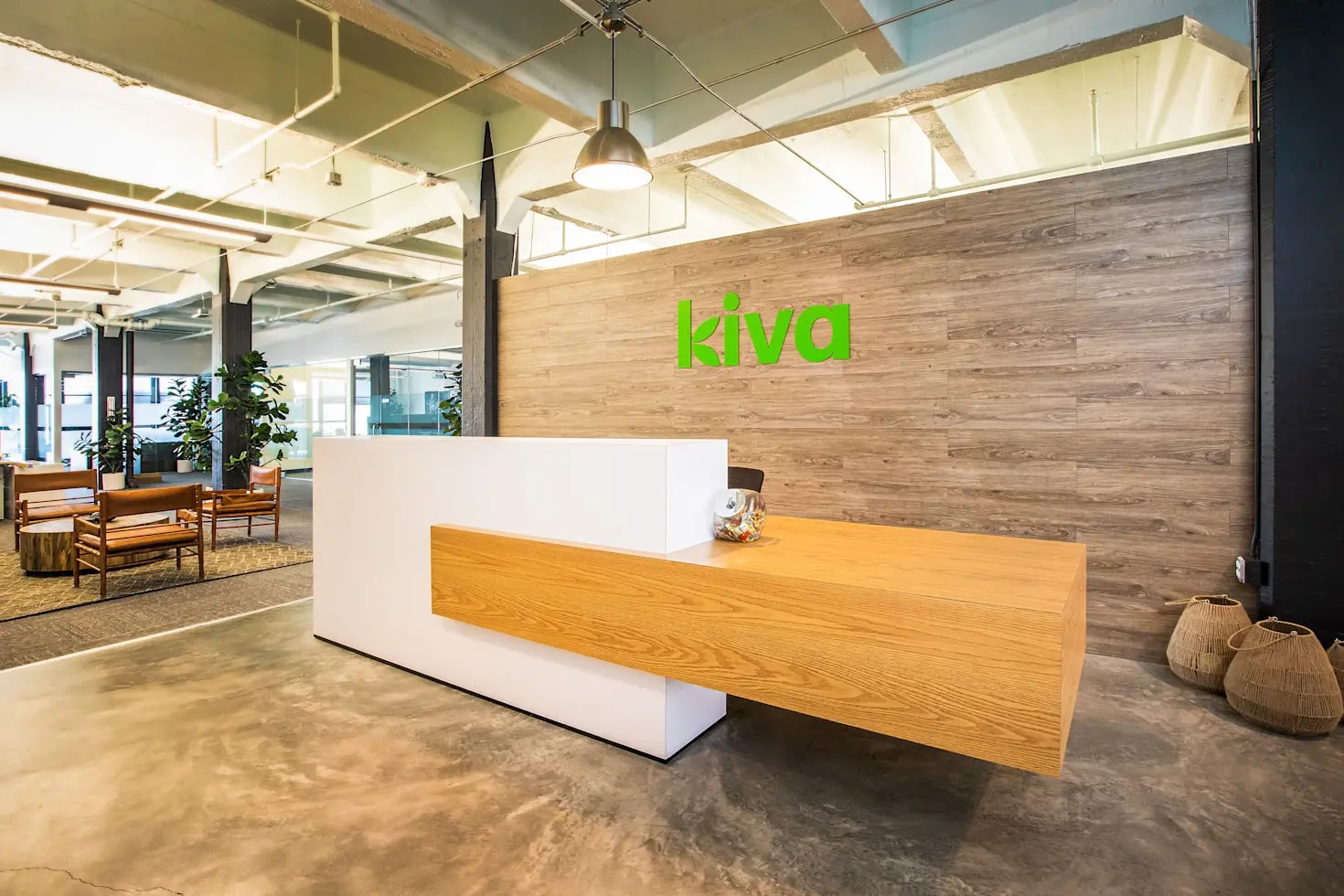
How to Use Wood in Reception Desk Design
Wood provides a warm and natural touch to the reception area. It can help to make a large commercial lobby feel more comfortable while maintaining a professional look.
Solid wood, natural veneer, engineered wood products, and decorative wood panels are available.
Solid Wood vs. Wood Veneer
Solid wood can add natural interest and may be suitable for certain elements. But before using large solid-wood sections, it is important to take into account movement, size, price and construction technique.
Wood veneer is the veneer that looks like real wood but is engineered to suit the application by the wood veneer manufacturer.
Veneer can be used for:
- Reception desk fronts
- Cabinet doors
- Side panels
- Feature walls
- Storage areas
Choosing Wood Species and Tones
Variations in the color of wood produce variations in mood.
- Walnut: Provides a high-quality, luxurious look.
- Oak: Provides a light, natural, contemporary appearance.
- Ash: Great for achieving a bright and clean wood look.
Flooring, wall finishes, furniture and lighting should also be taken into consideration. A beautiful wood finish for the lobby may not harmonize with the other finishes.
Wood Slats, Fluting and Feature Panels
Wood doesn't need to look like a single flat panel.
To add depth use:
- Vertical slats
- Fluted panels
- Ribbed surfaces
- Geometric veneer patterns
- CNC-cut details
These architectural details turn a reception desk into a striking visual centerpiece.
Protecting Wood in High-Traffic Reception Areas
Reception desks often receive frequent cleaning and are subject to inadvertent impacts. Select an appropriate commercial finish, and carefully describe the edges.
It's also important to choose cleaning products based on the manufacturer's recommendations. Strong chemicals can damage certain wood finishes over time.
How to Use Metal in Reception Desk Design
Metal may not be a significant visual component, but it can make a significant difference. Metal can be used for internal frames, visible trims, edging, decorative reveals, kickplates or feature details.
Common options include:
- Stainless steel
- Aluminum
- Powder-coated steel
- Brass
- Bronze
Metal Frames and Structural Components
A metal frame can support heavy materials for a large reception desk.
This is especially relevant if used in combination with large wood panels. The designer and fabricator should take weight, size, connections and installation into account at the outset.
Metal Trims and Decorative Details
Metal can also be used for a visual accent.
A narrow brass strip between wood and stone can provide a stylish transition. A black powder-coated metal desk can lend a more modern look to the architecture.
There's no need to use a lot of metal. Just a little bit, just the right bit, in just the right place can make the whole design work.
Using Metal to Define Edges and Transitions
Metal can provide a clean transition between two materials.
- For example: Stone → metal reveal → wood panel
This easy change will give a more carefully made desk.
Match Metal Finishes With the Interior
Consider the other finishes in the room before selecting the metal finish.
Warm wood colors are a perfect match for warm metal colors, like brass and bronze. Contrast can be enhanced with black metal. Brushed stainless steel or aluminum can help achieve a cleaner, more modern look.
Combining Stone, Metal and Wood: 5 Reception Desk Material Combinations
Here are some examples of the various types of reception desk materials that serve different design objectives.
1. Marble + Walnut + Brushed Brass
Ideal for luxury hotels, executive offices and premium developments.
The focus is on marble. Walnut provides richness and warmth. Brushed brass offers a subtle yet elegant touch, adding a touch of refinement without overwhelming the overall design of the desk.
2. Quartz + Oak + Black Metal
It is suitable for contemporary office spaces for corporate settings.
Light quartz will produce a clean surface. Oak adds a natural warmth. Black metal adds definition and contrast.
Alternatively, use the black metal again in lighting fixtures, door hardware or furniture to ensure a cohesive look.
3. Sintered Stone + Wood Veneer + Aluminum
This is a good combination for commercial areas where many people walk.
Surface gives a modern look, and wood veneer adds warmth. Aluminum can provide lightweight trims and clean architectural details.
4. Dark Stone + Dark Wood + Bronze Metal
Opt for this combination if you desire a dramatic and sophisticated reception area.
The important thing is to balance the ratios. Excessive use of dark materials can make the reception area appear smaller. The use of effective lighting and thoughtful lighter elements can help balance the space.
5. Light Stone + Natural Oak + Minimal Metal
This pairing is ideal for minimalist offices, wellness spaces, and contemporary hospitality settings.
The light stone helps to maintain the desk's visual purity. The natural oak creates warmth, and minimal metal details add definition without detracting from the overall design.
How Reception Desk Materials Work Together in Mixed Material Engineering
The design of a reception desk is more than just a matter of beautiful materials. You must also know how to handle those materials during the fabrication, transportation, and installation process.
The key to good material selection is knowing how each surface performs in actual commercial applications. Our method takes into account the weight, durability, maintenance, fabrication, installation and interaction of various finishes. Samples and shop drawings should also be reviewed prior to production to ensure your reception desk is exactly as you designed and as needed for your project.
Build a Strong Internal Structure First
Begin with the inside of the building before the outside.
The structure should be designed to accommodate the finishes, countertop, equipment, storage, and other elements.
With heavy stone, extra care must be taken with its load and support.
Account for Different Material Properties
Different materials such as stone, wood and metal react differently.
Wood is sensitive to changes in temperature and humidity. The temperature will cause metal to expand and contract. Stone is heavy and needs proper reinforcement.
The fabricator should take these differences into account when designing joints and connections.
Design Proper Material Transitions
Care needs to be taken in the planning of material transitions.
You can use:
- Mechanical fasteners
- Suitable adhesives
- Shadow gaps
- Metal reveals
- Edge profiles
- Supporting substrates
The actual solution will vary according to the material and construction technique.
Consider Weight Before Finalizing the Design
If you are looking for a heavy reception desk, you can opt for a large stone countertop.
It is important to take weight into account when:
- Design
- Structural planning
- Fabrication
- Transportation
- Site installation
This is even more critical in the case of big hotel and commercial developments.
Coordinate Fabrication and Installation
There must be coordination for a successful custom reception desk.
Before production is started, verify:
- Final dimensions
- Material samples
- Finish samples
- Shop drawings
- Electrical requirements
- Lighting locations
- Signage
- Site measurements
- Installation sequence
This approach will minimize the need for expensive changes later on.
How to Choose Reception Desk Materials for Different Commercial Spaces
The type of project should guide the selection of the materials.
Commercial Space | Suitable Combination | Main Design Goal |
Corporate office | Stone + wood + black metal | Professional and modern |
Luxury hotel | Marble + walnut + brass | Premium and memorable |
Retail showroom | Quartz + veneer + metal | Contemporary and branded |
Healthcare facility | Solid surface + wood + metal | Clean and welcoming |
Residential lobby | Stone + natural wood + bronze | Warm luxury |
Creative office | Wood + metal + stone | Bold and expressive |
Appearance is important, but so is easy cleaning and maintenance, especially in high-use areas like healthcare environments.
Common Mistakes When Combining Reception Desk Materials
Using Too Many Materials
Usually, three materials are enough to create contrast. Usually, three materials are enough to create contrast. Too many finishes can create a cluttered appearance of the desk.
Ignoring Visual Balance
Avoid unintentionally letting one material become dominant.
For instance, a large dark stone piece can overwhelm a small wood piece. The proportions should be adjusted until the materials feel balanced.
Choosing Materials Only for Appearance
Beauty and performance cannot be separated.
Take into account traffic, cleaning, scratches, moisture, maintenance, and expected lifespan when selecting your final choice.
Creating Poor Material Transitions
If the joints are not even and the thickness of the wood is inconsistent, it can create an unprofessional appearance on a costly desk.
Design for transitions rather than deal with them during installation.
Forgetting Lighting
The lighting can have a significant effect on the appearance of materials.
Integrated LED lighting can highlight wood texture, stone veining, signage, shadow gaps, and metal details. However, take into account how the lights will be arranged when designing the desk structure to ensure that wiring and access are practical.
Reception Desk Materials: A Practical Selection Checklist
Comparing reception desk materials before fabrication can help you avoid costly changes and choose surfaces that perform well over time.
- Project type
- Expected visitor traffic
- Brand identity
- Durability requirements
- Cleaning and maintenance
- Budget
- Material availability
- Structural requirements
- Lighting integration
- Accessibility
- Installation requirements
- Long-term performance
Accessibility needs to be considered from the outset. For projects covered by the U.S. ADA Standards, sales and service counters must include an accessible area of a certain size and approach. For instance, the ADA Standards for 2010 state that the maximum height of an accessible sales/service counter is 36 inches and that there are different requirements based on the approach. Always check the standards that apply to your project's location and building type.
Custom Reception Desk Design With Belosso
A custom reception desk provides you with greater control over dimensions, materials, finishes, storage, branding and architectural details.
At Belosso, we help our clients select and combine reception desk materials according to their project's design and performance needs. We take a project-based approach to the specification of materials, construction details, finish coordination, and installation requirements before production starts.
Custom material combination, wood and veneer finishes, stone or surface finishes, metal finishes, built-in lighting, branding and project-specific dimensions are all features that can be incorporated into our approach.
We are not just putting together three pretty materials. We think about how those materials should interact from the design phase to the actual construction and installation.
For architects, interior designers, developers, hospitality teams, and commercial clients, that can make it easier to design a reception desk that is unique yet still fulfills practical project needs.
Final Thoughts on Reception Desk Materials: Combining Stone, Metal and Wood
The right reception desk materials should do more than just make your lobby look appealing. They should facilitate the use of the space, be representative of your brand, deal with the flow of people, and function as an integrated engineered design.
Stone provides durability and a presence. Wood adds warmth and natural texture. Metal adds structure, precision, and modern detail. If you balance these materials carefully, you can design a reception desk that will look high-end without being over-the-top.
Here at Belosso we can assist you in finding unique combinations of stone, wood, metal, finishes, lighting and architecture for your project. For any new commercial reception area or existing lobby upgrade, contact our team to discuss your needs and create a commercial reception solution that meets your design and performance needs.
FAQs
What are the best materials for a reception desk?
The most effective reception desk materials are determined by traffic, design style, maintenance requirements, budget and performance expectations. When you choose the right material for the job, stone, wood, metal, solid surface, and engineered panels can all be successful.
Can you combine stone, wood and metal in one reception desk?
Yes. Stone, wood, and metal are particularly good combinations since each material has a different quality. Stone adds weight, wood adds warmth and metal adds structure and detail.
What are the most durable reception desk materials?
There is no single material that is successful in all circumstances. Stone, metal, solid surface, and other engineered materials can provide high durability, but the actual performance will also be influenced by fabrication, installation, edge details, and maintenance.
How do you maintain a mixed-material reception desk?
Care for each material according to the manufacturer's recommendations. Clean stone with appropriate cleaners, take care of wood finishes and clean metal based on the finish. If you clean the whole desk regularly, it will help to keep the entire desk looking neat.
How much does a custom reception desk cost?
The price will vary by size, material, complexity of fabrication, finishes, hardware, lighting, storage, branding, shipping, and installation. A wood and metal desk will typically cost less than a large custom desk with a stone base and integrated lighting.